Recently, the Supreme Court has been informed that, at present. There are no adequately validated tests in India for the diagnosis of dyslexia and other learning disorders affecting adult populations. Most tests available today were developed for use in children, thus leaving a gap in the ability to assist adult populations experiencing similar difficulties.
Read More: New Study Exploring Brain Plasticity in Developmental Dyslexia
NIMHANS Working on New Assessment Tools
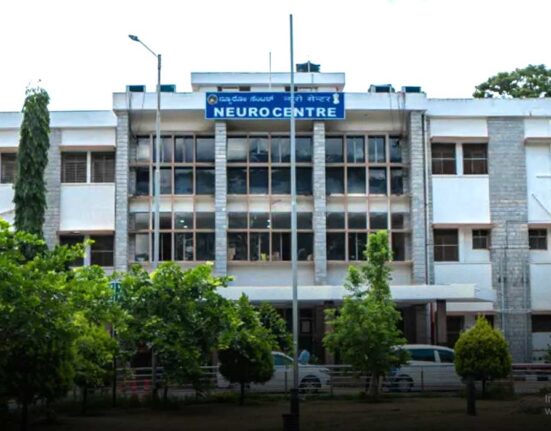
The National Institute of Mental Health and Neurosciences (NIMHANS) informed the Court that it continues to create appropriate assessments for adults. These instruments should be developed over the next three years through current investigations to help with the detection and enhancement of individuals with developmental disorders.
Supreme Court Takes Note
Someone brought the case to court to address the absence of an appropriate system for identifying learning deficits in adults. The Court noted that the existing framework for identifying learning deficits primarily concentrates on children. Hence, it is insufficient for adults. The Court heard a progress report from NIMHANS and informed the court that it was proceeding to close the case for the time being, whilst recording that work is being done to develop a new test for adults.
Scope for Future Action
The Court also stated that if no progress is made within the next three years, the petitioner can return to seek further action. Adult individuals with learning disabilities such as dyslexia do not just outgrow them. However, due to a lack of appropriate resources for assessment and diagnosis, adults tend to go without a formal assessment for their conditions.
Consequently, many struggle throughout their lives with educational, occupational, and everyday living functions without realising why they have difficulty in these areas. The creation of assessments designed for adults would assist in the early detection of and consequently provide better support for and create opportunities for inclusion for adults, such as those who have learning disabilities.
References +
Executive Summary: Global report on children with developmental disabilities. (n.d.). Www.who.int. https://www.who.int/publications/i/item/9789240080539
Executive Summary: Global report on children with developmental disabilities. (2023). Www.who.int. https://www.who.int/publications/i/item/9789240080539
Law, L. (2025). Top Stories in Supreme Court, High Court, Judgements, Case Status | Livelaw. Livelaw.in; Live Law. https://www.livelaw.in/top-stories
NHS website. (2026, April). Dyslexia in children. Nhs.uk. https://www.nhs.uk/conditions/dyslexia-in-children
Snowling, M. J., Hulme, C., & Nation, K. (2020). Defining and understanding dyslexia: Past, present and future. Oxford Review of Education, 46(4), 501–513.https://doi.org/10.1080/03054985.2020.1765756