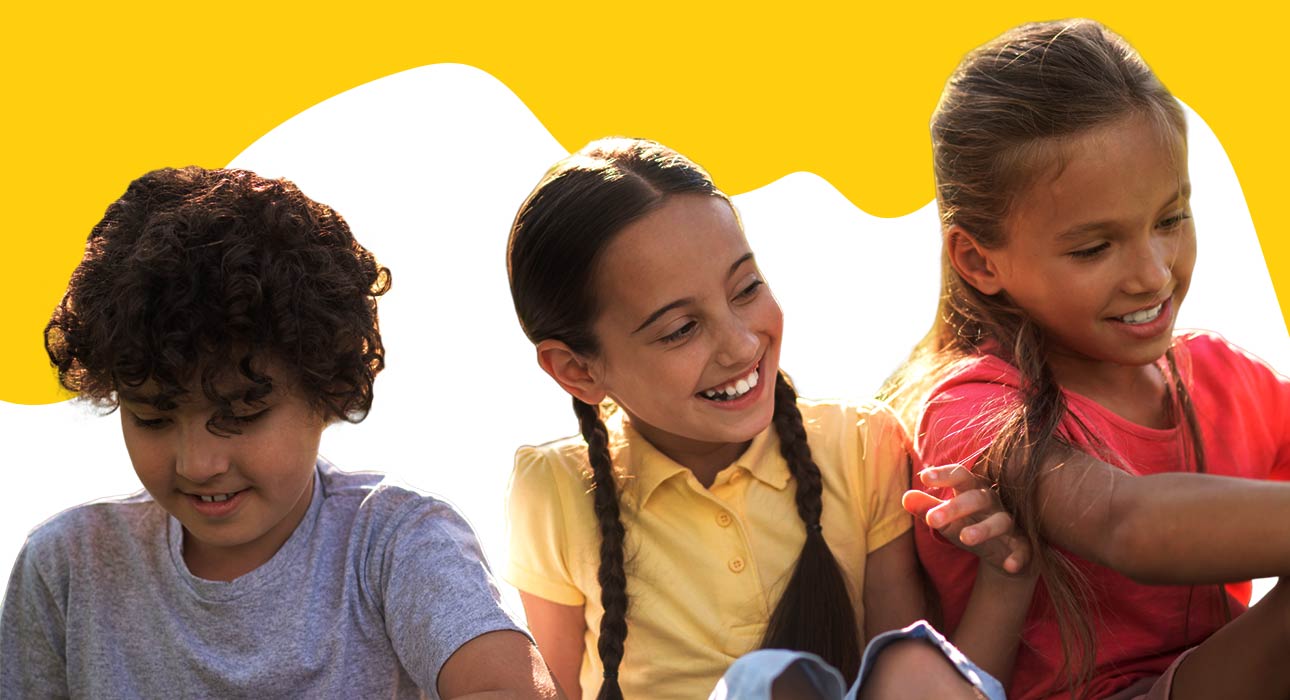
The playground is quiet; instead of chasing one another, kids are seen sitting in the corner, thumbing at their phones, talking about followers, filters, and which post will get more likes. What was once a space filled with laughter and imagination has slowly transformed into a stage for curated identities. The difference between being a kid and being a grown-up is no longer just blurred; it is almost disappearing due to various influences.
In recent years, a new demographic has emerged, often referred to as “The Mini Adults.”They are not just kids being kids, but trying to act or behave like adults. This is a systematic shift where kids are not playing, being anonymous and trying new things like they used to. Instead, kids show performative social behaviour of adulthood. The Mini Adults are changing what it means to be a kid.
Read More: The Importance of Socialisation in Influencing Human Behaviour
The Death of the “Play” Sanctuary
Childhood used to be a protected enclosure. Sociologists often refer to this as the “sanctuary of play,” a space where consequences were low, and imagination was the primary currency. Today, that sanctuary has been breached by the hyper-visibility of the digital age. The psychological driver here is Social Comparison Theory. Originally proposed by Leon Festinger (1954), this theory suggests that individuals determine their own social and personal worth based on how they stack up against others. Children compared themselves to the kid at the next desk previously. Now, they compare themselves to 25-year-old influencers.
Read More: How Childhood Validation Shapes Adult Self-Worth
1. The Result- A “Hurried Child” Syndrome (Elkind, 2007)
Hurried Child Syndrome is a psychological condition in which children are pressured to grow up too quickly, often resulting in them taking on adult-like behaviours, responsibilities, and stress levels before they are developmentally prepared.
Read More: Why Children Copy Adults: The Psychology of Imitation
2. The Cost- The loss of Cognitive Downtime
When kids start acting like grown-ups, like being into things that are supposed to make them look younger ( “Sephora Kid” phenomenon) or using big words they hear at work, they are trying to feel more in control. The world is volatile, so they think that if they look and act like adults, they will be safer and have more power. Kids want to be like the people they see as strong, so they try to be like them.
The Digital Mirror and Identity
Foreclosure “The algorithm does not care about age. It cares about engagement.” When a child enters the digital ecosystem, they are treated as a consumer and a creator simultaneously. This leads to what psychologists call Identity Foreclosure. This occurs when an individual commits to an identity without exploring different options. Because social media rewards a “consistent brand,” children are locking into curated, adult-like personas before they have even reached puberty.
According to Erik Erikson’s stages of psychosocial development, one of the primary tasks of adolescence is “Identity vs. Role Confusion.” However, the digital landscape forces this stage earlier. A ten-year-old managing a public-facing Instagram account is essentially performing emotional labour, a concept once reserved for the service industry, by regulating their expressions to maintain a specific social image (Hochschild, 1983).
The Commercialisation of the Developing Self
Today, the landscape is seeing what many experts call the “commodification of childhood.” In previous decades, the “tween” market was a demographic with its own aesthetic, bright colours, age-appropriate toys, and simple social hierarchies. Today, that middle ground has vanished.
The KGO (Kids Growing Older) phenomenon describes how children are maturing faster in terms of consumer behaviour. This isn’t a biological shift, but a marketing triumph. The American Academy of Paediatrics has shocking data that says that kids see thousands of ads on their devices every day. A lot of these ads do not even involve parents. They talk directly to the child about wanting to be popular (American Academy of Paediatrics, 2016).
When a nine-year-old kid spends seventy dollars on a firming cream, the American Academy of Paediatrics data shows that the child is not really buying something to take care of their skin. The child is buying firming cream because the digital ads make them think it will make them popular. They are buying social capital (American Academy of Paediatrics, 2016). In the digital arena, “looking the part” is the only way to be “seen.”
The Role of “Parental KGO” and Intensive Parenting
The role of the parent in this change is crucial, as the current era is defined by intensive parenting. Parents, often subconsciously, treat their children as extensions of their own social status.
- Micro-influencers. Some children are “born” into a digital career, their milestones monetised before they can walk.
- Peer-like dynamics. The shift from traditional parenting to “friendship” models removes the boundary that defines childhood.
When the line between parents and kids gets blurred, kids start to do what the parents do. This is because kids learn from the people who have power. If the parents get praised for something, the kids will do it too. In a world that thinks it is important to get things done and look perfect, kids learn that it is not as good to play as it is to get things done. Kids learn that playing is not as valuable as doing something that people think is important. The Social Learning Theory is, like this it was talked about by Bandura in 1977.
The Neurobiology of the “Mini Adult”
The brain isn’t meant to be “on” this way. The Prefrontal Cortex (PFC), responsible for executive function and impulse control, does not finish developing until the mid-twenties. By forcing children into adult social structures, which require high levels of social monitoring and sophisticated emotional regulation, massive “cognitive load” are placed on a developing system.
Chronic exposure to social validation (likes, comments, views) triggers the dopaminergic reward system. For a child whose brain is highly plastic, this can create a physiological dependency on external validation. The “mini adult” isn’t just a social choice; it’s a neurological adaptation to a high-pressure environment. Research by Giedd (2008) highlights that the pruning of synapses in the adolescent brain is heavily influenced by environment; if that environment is purely performative, the “creative” synapses may be lost(Giedd,2008).
Cognitive Dissonance and the Loss of Resilience
There is a profound gap between a child’s social performance and their emotional maturity. This creates a state of chronic cognitive dissonance. A child may look like a grown-up, talk like a grown-up, but the child does not have the experience of life to deal with things, when people do not like them in public or when they fail at something they are trying to do. The child is not ready to deal with things that’re hard for adults, like the child, for example, public rejection or failure at a job.
- High-stakes childhood. Everything is recorded, and nothing is forgotten in the public space.
- The “Safetyism” Paradox. While children are socially hyper-mature, they are often physically more restricted than previous generations (Haidt, 2024).
The result is a generation that is “fragilely sophisticated.” They can navigate a complex skincare routine or a brand deal, but they struggle with the basic, messy conflicts of a playground because those conflicts haven’t been “curated” or mediated by an interface.
The Long-Term Psychological Forecast
What happens when a generation skips being a kid? The phenomenon of a generation passing childhood often results in a premature rise in anhedonia and burnout. When kids are supposed to be acting out as adults as early as age nine, actual adulthood seems more like a life sentence than a transition to adulthood. They often describe feeling deeply unhappy and depleted by the age of their early twenties.
This was backed by a previous study by Jean Twenge (2017), titled “iGen”: despite members of this demographic being physically safer compared to those of older generations, they are more susceptible in a mental sense. The generation reports much higher rates of loneliness and anxiety than any previous age group. The ‘Mini Adult’ boom reflects a society obsessed with the ‘next step’ at the expense of the ‘current state.’ That cultural shift creates efficient, articulate, well-groomed people who still lack the critical strength found in the messy, unscripted freedom of conventional childhood.
Conclusion
The metamorphosis of children into “mini adults” represents a profound structural realignment of human development. This phenomenon is not merely a fleeting social trend but a byproduct of a digital-first economy that has effectively hijacked the biological timeline of maturation. By replacing the physical sandbox with the digital profile page, society has traded the vital, messy freedom of childhood for a curated, high-stakes performance.
Ultimately, the acceleration of childhood does more than just bypass a life stage; it threatens the long-term mental health of future generations. If the value of the “current state” of childhood continues to be sacrificed for the efficiency of the “next step,” the result may be a society of highly articulate, well-groomed individuals who lack the essential psychological resilience required to sustain a healthy adult life.
References +
- Bandura, A. (1977). Social Learning Theory. Prentice Hall.
- Elkind, D. (2007). The Hurried Child: Growing Up Too Fast Too Soon. Da Capo Press.
- Erikson, E. H. (1950). Childhood and Society. W. W. Norton & Company.
- Festinger, L. (1954). A theory of social comparison processes. Human Relations, 7(2), 117–140.
- Giedd, J. N. (2008). The teen brain: Insights from neuroimaging. Journal of Adolescent Health, 42(4), 335–343.
- Haidt, J. (2024). The Anxious Generation: How the Great Rewiring of Childhood Is Causing an Epidemic of Mental Illness. Penguin Press.
- Hochschild, A. R. (1983). The Managed Heart: Commercialisation of Human Feeling. University of California Press.
- Livingstone, S. (2008). Taking risky opportunities in youthful content creation: Teenagers’ use of social networking sites for intimacy, privacy and self-expression. New Media & Society, 10(3), 393–411.
- Twenge, J. M. (2017). iGen: Why Today’s Super-Connected Kids Are Growing Up Less Rebellious, More Tolerant, Less Happy–and Completely Unprepared for Adulthood. Atria Books.
- Vygotsky, L. S. (1978). Mind in Society: The Development of Higher Psychological Processes. Harvard University Press.