Disclaimer: The following article may contain words and themes that are emotionally sensitive and can be triggering. Please read with caution. This material is for awareness purposes only.
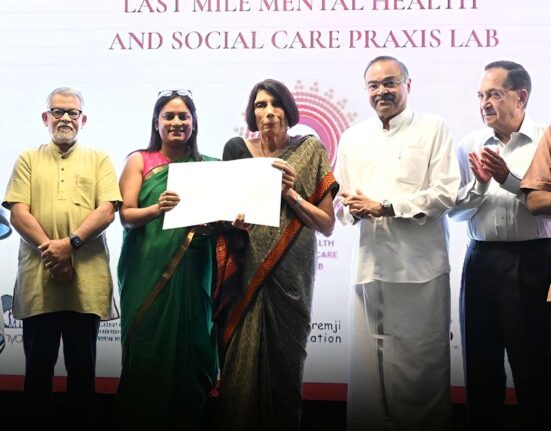
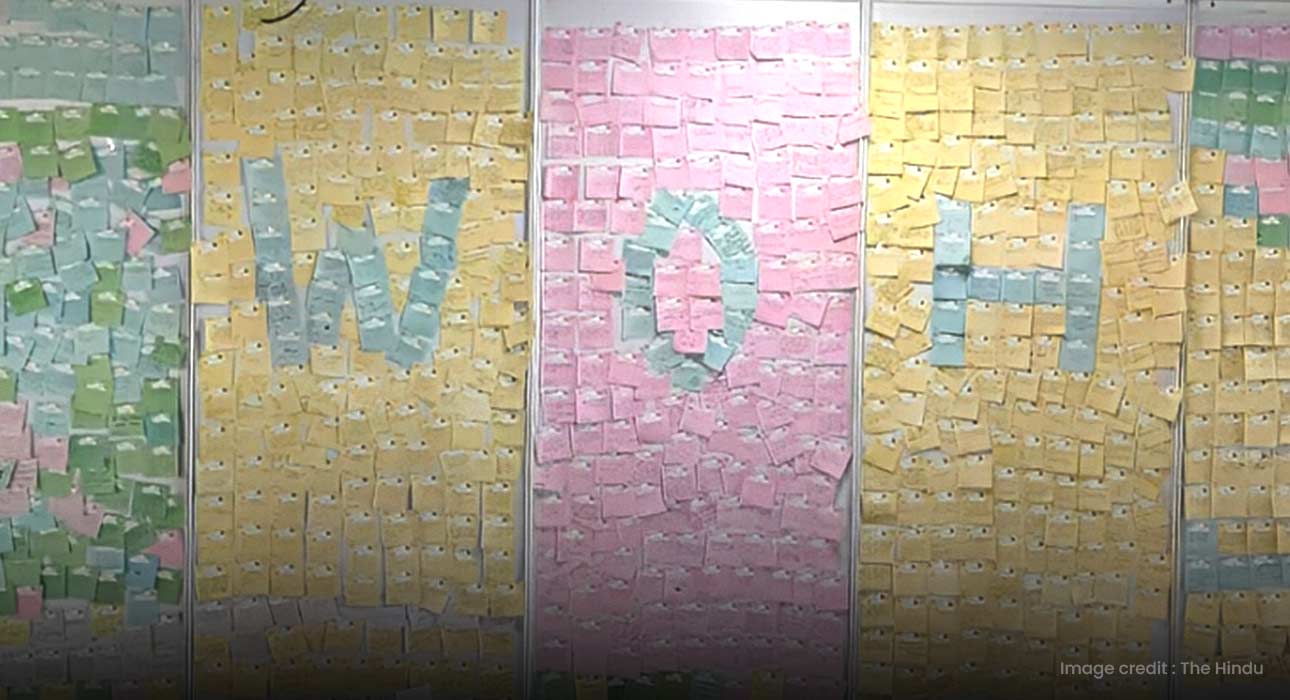
A Wall of Hope displayed at the IIT Madras Research Park in Taramani has 20,000 messages from children and young adults on reasons to live. The goal was to bring hope, create a safe space and dialogue while also encouraging youngsters to seek help for mental health challenges and suicide prevention. The year-long project was launched in October 2025 by The Schizophrenia Research Foundation (SCARF) and its department of youth mental health. It was conducted and monitored by over 400 trained youth volunteers.
The Post-it notes contained different versions of the purpose of life and were collected from youngsters aged 10-25. The initiative reached 23 colleges, four schools, five youth spaces and one scientific conference in Tamil Nadu, Puducherry, Andhra Pradesh, Telangana, Odisha and West Bengal, according to The Times of India.
Youth Suicides In India
There were 400 post-it notes related to suicide and distress on the Wall of Hope, according to TOI. Tamil Nadu reportedly ranks second-highest for suicides in the country, and India has one of the highest number of youth-related suicides in the world. The triggers include family pressures, matters of love and failure in exams that cause many young people to take the extreme step. It was reported in 2024 that student suicides had exceeded farmer suicides in India, according to Tribune India.
The Supreme Court of India had created a national task force in 2026 to assess higher educational institutes, focusing on student welfare and mental health. A recent student protest after a suicide at IIT-Delhi also called for more active recognition and inclusion of mental health services on their campus. Some research has also attributed adolescent suicides in India to problems in families, including lack of connections, parental fights, abuse, neglect, extreme pressures, etc.
Read More: Country’s First Suicide Prevention Policy Will Be Implemented In Madhya Pradesh
Prevention is Better Than Cure
While there are physical illnesses that do not have a cure or cross a curable stage, suicide and mental illnesses can be treated. Prevention can begin with awareness, empathy and creating or sharing hope with someone who may have almost given up due to one or many reasons. Suicide usually never has just one single cause, but there are many mindful ways in which individuals and communities can give hope to somebody who is considering the extreme.
Reaching Out In Small Ways
Studies have shown that people who die by suicide are often described as those who were happy and brought joy and comfort to others. Such individuals can be extremely hard to read when it comes to finding symptoms of depression or anxiety. It is important to be mindful and aware in order to detect the slightest sign of discomfort and loss of the will to live.
One does not need to be a therapist to do this, and it requires awareness in identifying distress, particularly in friends or relatives. Studies have also found that many people with suicidal thoughts assume that sharing their problems with others may lead to causing sadness or not being understood. It is extremely important to make sure that this does not happen. Simple steps can prevent such thoughts from triggering a dangerous reaction.
- Listen with an open mind
- Avoid being judgmental or critical
- Choose words carefully
- Be honest about opinions without being hurtful
- Explain the meaning of boundaries to them
- Empower them on how to tackle difficult situations
- Uplift them with positive words and thoughts
- Share personal experiences that helped you overcome a difficulty
Break Stigma Of Insensitivity
A major form of awareness is to also break the insensitivity around suicide and mental illness that still exists in many. Adults can create a mindful environment by correcting youngsters and others when they make insensitive comments or joke about mental health. An understanding led by compassion and calmness will have more impact than one that is forced by anger and shouting.
Conclusion
The Wall of Hope sends out a strong message of resilience and strength by just willing to listen and be there. Prevention of suicidal thoughts and mental health distress must not only depend on experts and professionals but on every member of society. It is a silent responsibility that calls for gentle ways of public behaviour and mannerisms. While one cannot be blamed for not being able to help a person in distress, one can surely attempt to make situations and life a little easier and kinder. A small act of compassion and kindness can be life-changing for somebody who may be seeking one small reason to live another day.
Reference +
- International Association for Suicide Prevention https://www.iasp.info/wp-content/uploads/Creating-Hope-Through-Action.pdf
- Indian Mental Health Observatory https://cmhlp.org/imho/blog/why-more-children-in-india-are-dying-by-suicide-a-deeper-look/
- The Hindu https://www.thehindu.com/news/cities/chennai/wall-of-hope-mental-health-initiative-led-by-youth-unveiled-in-city/article71540374.ece
- TOI https://timesofindia.indiatimes.com/city/chennai/chennai-youths-raison-detre-in-post-it-notes-on-display-at-iit-m/articleshow/134646112.cms
- Tribune India https://www.tribuneindia.com/news/india/testing-times-more-students-dying-by-suicide-than-farmers/