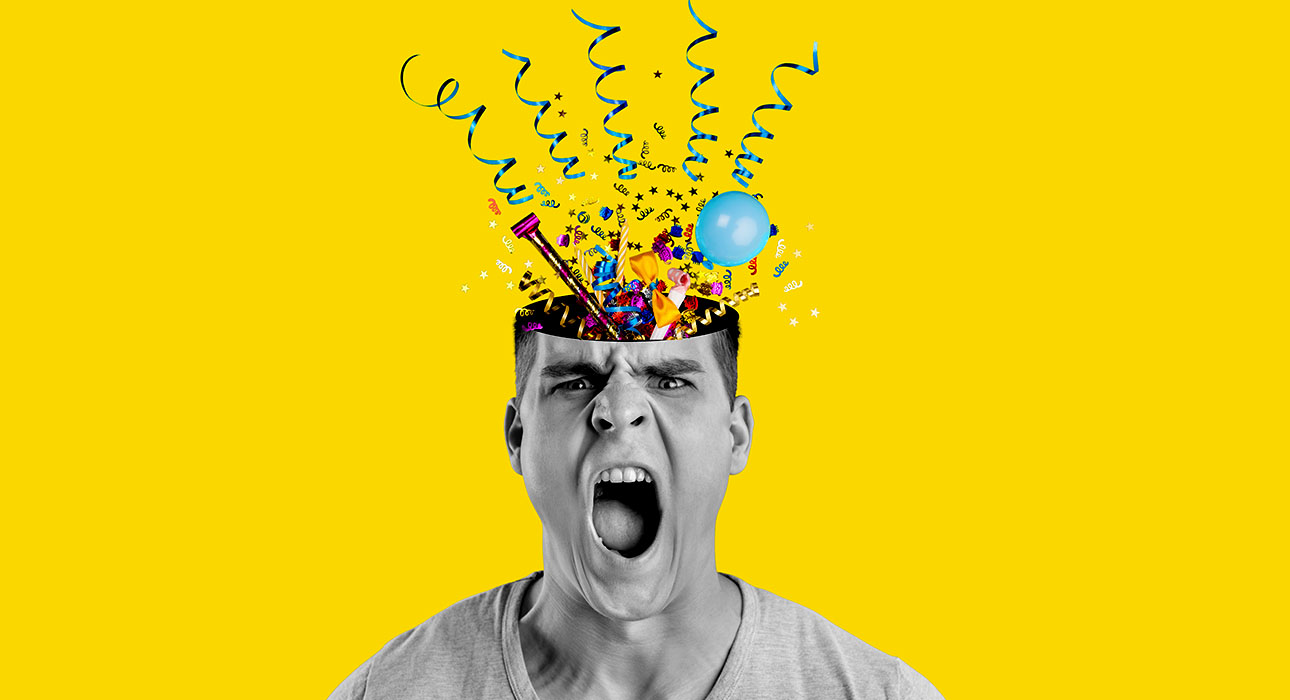
Have you had an experience where you thought you remembered something happening, that actually didn’t? Maybe you have a childhood story that your family says never happened. Or perhaps the way you remember a moment is very different from how everyone else remembers it. It is very disturbing, not just because of the memory itself being potentially “false”, but because the feelings associated with that memory are just as real as your actual memories.
As it relates to psychology, it is interesting to note that the way we use our imagination allows our brains to create “false” memories in the same way as “real” memories. These “false” memories are not “lies” or a lack of “strength,” and are therefore not a sign of mental illness.
Why Memory Isn’t as Reliable as We Think
Most of us think of memory as a camera that captures, stores and keeps a visual record of our experiences. Memory does not work this way; as some psychologists have pointed out, memory functions as a storyteller. The processes of reconstructing memories are different from reproducing memories. Each time we remember something, the brain rebuilds the memory using Bits of stored information, Current emotions and beliefs and Expectations and imagination.
The overlap of brain systems in imagining and remembering provides us with the ability to remember and imagine as overlapping processes (Conway et al., 2015). This overlap allows us to better understand our lives and develop plans for the future. But it also makes memory vulnerable to distortion.
Read More: What Is Episodic Memory, and Why Does It Decline With Age?
What Are False Memories?
False memories are memories of events that never happened or happened differently than remembered, yet feel subjectively real (Loftus, 2005). They can involve Incorrect details (who said what); Entire events (something that never occurred); Emotional experiences tied to imagined situations. False memories are not created with the intent of deception; rather, the individual experiencing the false memory truly believes that they have perceived the event accurately.
Individuals may also feel confused or distressed when their beliefs about the memory conflict with society’s beliefs about the memory (Shaw, 2020). One might assume this only happens with realistic memories. Surprisingly, research shows that even implausible or unlikely events can feel real if imagined repeatedly, though plausible events are more vulnerable (Rubin & Berntsen, 2007). The more detail we add, the more the brain treats the imagined event like a real one.
Read More: Psychology of False Memory Syndrome
Imagination Inflation: When Imagining Becomes Remembering
One of the strongest links between imagination and false memory is a process called imagination inflation. It occurs when imagining an event increases your belief that it actually happened. In classic experiments, participants were asked to imagine childhood events, some real, some made up. Later, many reported higher confidence that the imagined (false) events were true (Garry et al., 1996). Why does this happen? Because imagination adds vivid sensory details, increases familiarity, and makes events feel mentally “real”. Over time, people forget the source of the memory, whether it came from imagination or experience. This is known as a source monitoring error (Johnson et al., 1993).
An example of false memory is taken from the Deese–Roediger–McDermott (DRM) paradigm. Participants hear a list of related words like: bed, pillow, dream, blanket. Later, many confidently recall the word “sleep” even though it was never mentioned. This happens because the brain remembers the gist rather than the exact details. Emotional word lists increase this effect even more (Brainerd et al., 2008).
Read More: Understanding Short-Term and Long-Term Memory: How We Retain What Matters
Fake Memories About Our Own Lives
False memories are not limited to lab experiments or word lists. Researchers have successfully created false autobiographical memories—memories about a person’s own life. In some studies, participants came to believe they had been lost as a child, caused a serious accident and committed a crime they never committed. These memories often included emotions, visual details and strong confidence (Shaw & Porter, 2015).
A large review of false memory implantation studies found that combining imagination, suggestion and social reinforcement makes false memories more likely (Scoboria et al., 2021). False memories often feel real because they fit neatly into our personal story, match our beliefs about ourselves, and feel familiar and emotionally coherent. Research shows people are very poor at distinguishing true memories from rich false memories, even when warned (Shaw, 2020). The interpretation of memory by the brain is motivated by meaning rather than agreement with factual accuracy.
If the Memory Is Fake, Why Do the Emotions Feel Real?
This generates a certain level of discomfort because even though the event described may not be real, the emotional response attached to the event remains the same. The emotional experience can be as strong as a true memory (Phelps & Schacter, 1998). As a result of this phenomenon, when we have a mental image of a memory, the brain generates similar reactions as when we have an actual event to use mental imagery for.
This means feeling emotional doesn’t prove that something happened. Strong emotion increases confidence in memory, and Emotional memories, true or false, are harder to question. Memory has a complex relationship with Emotion. It’s been shown through research over many years (Zhang et al 2025) that if you are “excited” when you learn or remember something, you may be more likely to create a false memory if presented with a suggestion afterwards.
Social Influence and Shared Imaginations
Memory is not formed in isolation. Family stories, therapy conversations, cultural narratives and even social media shape what we imagine and later remember. When imagined memories are repeated and validated by others, they can become socially reinforced false memories (Loftus, 2005).
Recent research suggests that AI-generated images and stories can intensify false memory formation. AI-edited photos:
- Add visual realism
- Increase emotional response
- Make imagined events feel experienced
As technology blurs reality further, imagination-based memory distortion becomes even more relevant (Nash et al., 2024).
Read More: The Psychology Behind Memory Distortion
Why This Matters in Real Life
False memories have real-world consequences:
Therapy:
- Clients may remember emotionally real but factually uncertain events
- Therapists must avoid suggestion
- Validation should focus on feelings, not assumed facts
Legal Settings:
- Emotional confidence does not equal accuracy
- Repeated questioning can inflate false memories
Everyday Relationships:
- Misunderstandings
- Conflicts based on remembered intent
- Long-held emotional beliefs
Imagination Is Powerful and Human
False memories do not mean the mind is broken. In other words, studies show that our brains operate through meaning, emotion and imaginative processes. The most important findings from these extensive years of study are that our brain can perceive a false memory as being emotionally true. Understanding this helps us become more careful with certainty, more compassionate with others and more curious about our own minds. Imagination gives us creativity, empathy and hope, but it also reminds us that memory is not a mirror of the past; it is a story we continue to rewrite.
References +
Brainerd, C. J., Stein, L. M., Silveira, R. A., Rohenkohl, G., & Reyna, V. F. (2008). How does negative emotion cause false memories? Psychological Science, 19(9), 919–925. https://doi.org/10.1111/j.1467-9280.2008.02177.x
Conway, M. A., & Loveday, C. (2015). Remembering, imagining, false memories and personal meanings. Consciousness and Cognition, 33, 574–581. https://doi.org/10.1016/j.concog.2014.12.002
Garry, M., Manning, C. G., Loftus, E. F., & Sherman, S. J. (1996). Imagination inflation: Imagining a childhood event inflates confidence that it occurred. Psychonomic Bulletin & Review, 3(2), 208–214. https://doi.org/10.3758/BF03212420
Johnson, M. K., Hashtroudi, S., & Lindsay, D. S. (1993). Source monitoring. Psychological Bulletin, 114(1), 3–28. https://doi.org/10.1037/0033-2909.114.1.3
Loftus, E. F. (2005). Planting misinformation in the human mind: A 30-year investigation of the malleability of memory. Learning & Memory, 12(4), 361–366. https://doi.org/10.1101/lm.94705
Phelps, E. A., & Schacter, D. L. (1998). Emotional influences on memory. Current Directions in Psychological Science, 7(2), 65–68. https://doi.org/10.1111/1467- 8721.ep11521865
Rubin, D. C., & Berntsen, D. (2007). Imagination and memory: Does imagining implausible events lead to false autobiographical memories? Psychological Science, 18(7), 580–586. https://doi.org/10.1111/j.1467-9280.2007.01944.x
Scoboria, A., Wade, K. A., Lindsay, D. S., Azad, A., Strange, D., Ost, J., & Hyman, I. E. (2021). A meta-analysis of memory implantation studies. Memory, 29(6), 805–824. https://doi.org/10.1080/09658211.2020.1869695
Shaw, J. (2020). Confident false memories. Frontiers in Psychology, 11, Article 650. https://doi.org/10.3389/fpsyg.2020.00650
Shaw, J., & Porter, S. (2015). Constructing rich false memories of committing a crime. Psychological Science, 26(3), 291–301. https://doi.org/10.1177/0956797614562862
Zhang, X., et al. (2025). Emotional states and susceptibility to false memories. Cognition and Emotion. Advance online publication.https://doi.org/10.1080/02699931.2025
Nash, R. A., et al. (2024). Generative artificial intelligence and the amplification of false memories. Memory. Advance online publication. https://doi.org/10.1080/09658211.2024