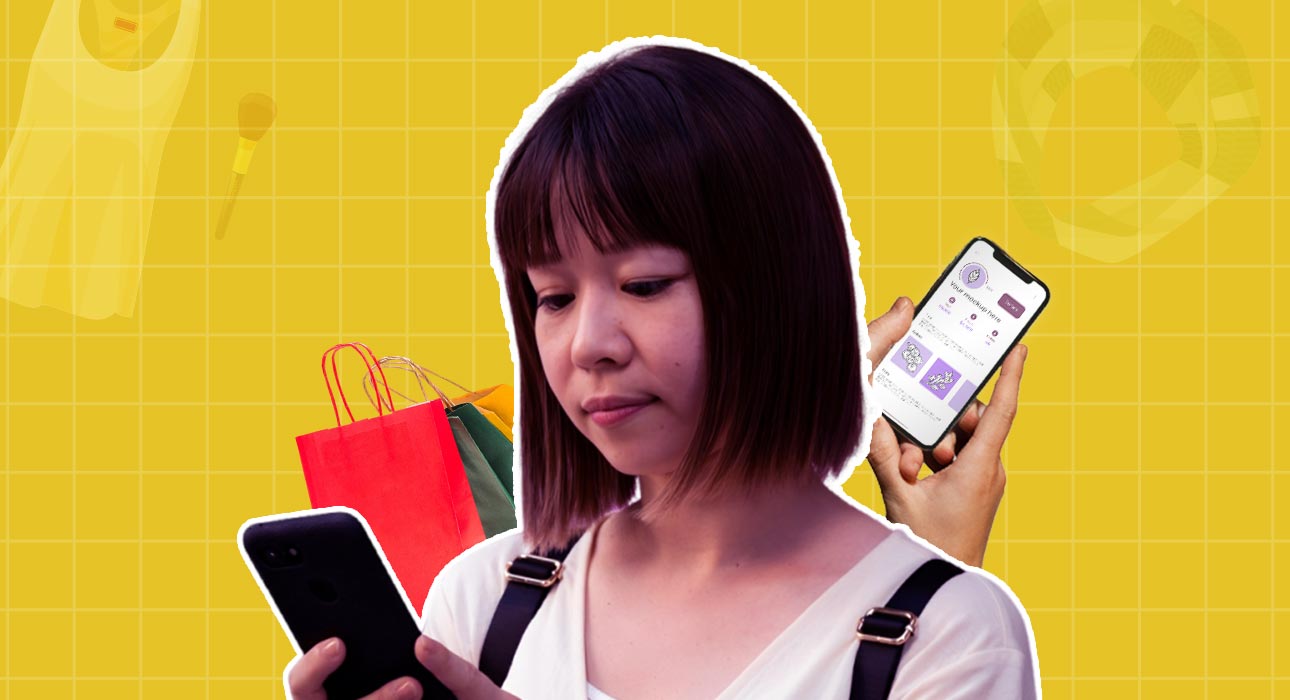
Kim is a 25-year-old working in an office in Seoul. She launches what appears to be a food delivery application. She browses, selects a dish, puts it in her basket and monitors a delivery boy walking his way to her apartment. Nothing is coming. All of her money had been withdrawn from her account. There’s no food. But she feels a bit better and states that it is a stress reliever for her (Korea Times, 2026).
Kim is among a rising group of South Korean Gen Zs who are drawn to a new trend in the country’s online habits, dubbed “dopamine sites” due to their similarities with shopping apps and break rooms, but without the real-world consequences. These sites are receiving worldwide attention and are sweeping South Korea by storm; they are a strange mix of tech, economics and psychology. They are discussed here, and in a way that is both entertaining and informative, and they tell a lot about the world of loneliness, anxiety and the inner life of a generation under pressure.
Read More: The Risk-Taker’s Brain: The Dopaminergic Drive in Entrepreneurship
What are Dopamine Sites?
The dopamine sites are platforms developed to mimic the visual sensations and ritual of an old digital experience without the substance. The most popular one is FoodNeverComes, which functions and looks like a food delivery app. Users scroll through the seemingly lifelike menus, read the ratings and reviews, put products in a shopping cart, enter an address and click “order.
Then, a simulated courier accepts the order and starts to move towards the user on a real map. Nothing arrives. This is a performance- a digital theatre of consumption (Fast Company, 2026). A second type of dopamine site is totally different. These break rooms are based on an idea from Korea, “smoke break”, which is a temporary break from work where colleagues gather outside and share a smoke.
These online break rooms just feature a “start” button and a real-time counter of the number of other anonymous users who are online at this moment. No conversation happens. The users write short notes such as getting through another day, etc. Nothing happens except the seemingly non-existent feeling of not being alone (Korea Times, 2026).
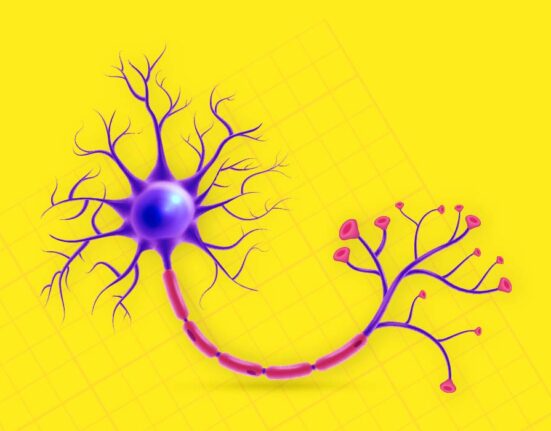
“Dopamine site” refers to dopamine, which is a chemical in the brain that is important for motivation, pleasure and reward. One thing that people do not realise is that when we get something pleasurable, dopamine is released. In fact, dopamine is released during the anticipation of a reward, not the moment of receiving it (Schultz, 1998), which is during the build-up of anticipation, browsing, and clicking. That’s why “buy” can be a very rewarding action, even if no merchandise gets delivered.
It’s not the result, it’s the ritual. These sites have been variously hailed by users and commentators as “harm reduction disguised as entertainment” (Gadget Review, 2026) and a “sad emblem of late-stage capitalism” (Reading the Network, 2016). There are elements of truth in both reactions. However, both do not account for the fact that these sites are springing up right now, in South Korea, among Gen Z.
Read More: How the Dopamine Economy Creates Digital Fatigue
Burnout, Debt, and Digital Hunger
Dopamine sites are only comprehensible when we understand the production with which they are used. The South Korean generation born after the late 1990s and the early 2000s is the first generation to be raised in a society that has set some of the highest standards for both academic and professional competition, struggling to cope with skyrocketing living expenses, low wages for entry-level workers, and the extended working hours culture which has become a national debate (Lee & Kim, 2025).
In South Korea, antidepressant prescriptions were increased by 65 per cent during the last decade, and the biggest increase was observed in the 20s age group (Lee & Kim, 2025; SeoulTBS, 2024). Loneliness is at the core of this image. According to the official report released by South Korea’s Social Indicators (2024), the number of individuals who feel lonely has been increasing from 18.5 per cent last year to 21.1 per cent this year, while the percentage of those who state nobody really knows them has climbed from 16.1 per cent to 16.2 per cent (Korea Herald, 2025).
Loneliness is particularly high among Gen Z, with almost half (49%) describing their mental health as fair or poor compared to 23% of older generations across the world (GWI, 2024; Gallup, 2025). As quoted in the Korea Times, a researcher said that “this is a time of uncertainty about the future and a sense of burnout. Even if someone else is connected at the same time, it doesn’t matter who they are; it makes people feel like their sense of loneliness and anxiety is alleviated” (2026).
There’s added financial pressure. In an environment of economic hardship, online shopping (and particularly food delivery) has become one of the top ways for South Korean young adults to find comfort and indulgence. Many can’t afford to spend the money for ordering food late at night. Dopamine hits are designed to provide a ‘life hack’ that is the release of emotion from the ritual, but not the debt.
Read More: Side Effects of Dopamine Agonists
What Psychology Says
Dopamine hits are psychologically interpreted as a behavioural alternative; a safer replacement for a problematic behaviour (impulsive spending, late-night ordering, etc.). It’s the same concept as Nicotine Replacement Therapy or as the psychological concept of stimulus control- removing the stimulus, or the trigger that leads to the unwanted behaviour, means satisfying the emotional need in another, less expensive manner (Marlatt & Gordon, 1985).
If the person is really addicted to spending or eating, a harmless enactment of the act may break the vicious cycle. The online break room sites are based on something a little more- the human need to be present, to be part of the other people even if not seen, but felt. The distress of being isolated has been found in every study to be diminished by even subtle cues to contact (Cacioppo & Patrick, 2008) – to our group, this means being around other people in a library or walking through a busy street. The break room locations are a digital emulation of this.
No one speaks to you, nobody knows you, but there is someone else there, and, at the moment, that’s all that matters. However, these sites fail to answer an important question: they maintain the behavioural loop in which people open delivery apps, browse food options, and seek a dopamine rush whenever they feel stressed or lonely. The platform removes the financial consequence. This implies that people fail to address the root emotions, including anxiety, loneliness, and the need for comfort or stimulation, in any meaningful way.
The research literature on dysfunctional coping strategies (those which temporarily alleviate problems, but over time add to or perpetuate them) indicates that over time, dysfunctional coping patterns, when they consist of simply substituting one coping pattern for another, can help to maintain avoidance behaviours (Carver et al., 1989). Also, what do these sites normalise? When a young person feels that no real person is available to comfort him or her, but they believe that they must “act as if” someone is there, they may be less likely to seek out the real person or professional support that would provide comfort.
When researchers interviewed Lee, a student who visited the smoking break site during exams, she described it as “strangely comforting.” She said it felt like taking a break with someone (Korea Times, 2026). This assures comfort indeed! It’s also, however, a replacement for something much more nourishing: a design.
Read More: The Psychological Harm of Vaping and A Guide to Quitting
Conclusion
The dopamine sites are ingenious, inexpensive and currently very useful for some of the users. They are a very real and creative response to a very real set of pressures. These pressures include financial stress and emotional exhaustion. They also include the loneliness of urban life. In addition, they involve a technological environment designed to trigger cravings that most young people simply cannot afford to satisfy. They are not the cause, but are a symptom. It is more important what they show than what they do.
This generation finds comfort in shopping carts that are not real and rooms that are not real. This does not mean that something has broken them. Instead, it tells us what kind of world society asks them to live in. It’s a lonely place that it is. It’s a true burnout. The desire to connect, to enjoy and to ease is true. Dopamine sites stimulate these needs. The only other question, more difficult, both for the individual, clinician and society, is what the real thing may be. No one should use a fake cart. But everyone deserves something to make a rough night feel a little better.
References +
- Cacioppo, J. T., & Patrick, W. (2008). Loneliness: Human nature and the need for social connection. W. W. Norton & Company.
- Carver, C. S., Scheier, M. F., & Weintraub, J. K. (1989). Assessing coping strategies: A theoretically based approach. Journal of Personality and Social Psychology, 56(2), 267–283. https://doi.org/10.1037/0022-3514.56.2.267
- Fast Company. (2026, June 14). Dopamine sites: Fake online shopping apps let you pretend to buy things. https://www.fastcompany.com/91560432/dopamine sites-fake-online-shopping-apps-let-you-pretend-to-buy-things-foodnevercomes
- Gadget Review. (2026, June 15). South Korea’s fake shopping sites let you get your dopamine hit without buying anything. https://www.gadgetreview.com/south koreas-fake-shopping-sites-let-you-get-your-dopamine-hit-without-buying anything
- Korea Herald. (2025, May 21). Loneliness hits 62% of solo households in Seoul, city steps up care programs. https://www.koreaherald.com/article/10490634
- Korea Times. (2026, May 27). Gen Z turn to dopamine sites for quick comfort. https://www.koreatimes.co.kr/lifestyle/trends/20260527/gen-z-turn-to-dopamine sites-for-quick-comfort
- Lee, J., & Kim, S. (2025). Exploring the association between loneliness, work environment, and depressive symptoms: Evidence from young Korean workers in the Seoul Metropolitan Area. Frontiers in Public Health, 13, 1593957. https://doi.org/10.3389/fpubh.2025.1593957
- Marlatt, G. A., & Gordon, J. R. (Eds.). (1985). Relapse prevention: Maintenance strategies in the treatment of addictive behaviours. Guilford Press.
- Schultz, W. (1998). Predictive reward signal of dopamine neurons. Journal of Neurophysiology, 80(1), 1–27. https://doi.org/10.1152/jn.1998.80.1.1
- Song, I. (2025). Correlates of loneliness and social isolation among Korean adults. Healthcare, 13(7), 806. https://doi.org/10.3390/healthcare13070806