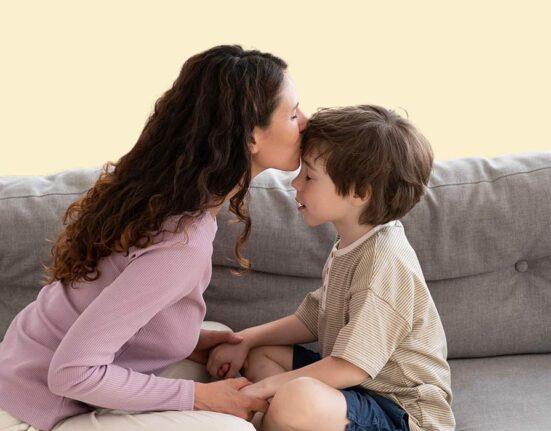
Eight-year-old Anaya had been at her grandparents for a family reunion. Before going home, her parents told her to kiss all the older people relatives-even though she seemed clearly uncomfortable and softly stated she didn’t want to. She was told, “Don’t be rude. They are family.” Over the years, Anaya grew up believing refusing physical touch was impolite.
In her adolescence, it was easiest for Anaya to not say ‘no’ when hugged unwillingly, to not speak up against the decisions of her friends or when boundaries were being crossed. Anaya did not know what it meant for her body to be hers, what she had the authority to choose with whom she shared that body, until the consent workshop. This reflects the experiences of many children from diverse cultures.
Children learn very powerful lessons through daily interactions about the importance of their feelings and boundaries. This shapes their self-protection in the future as well as the way they respect the limits of other people when they are grown up. The concept of consent: While the notion of consent often takes centre stage in an adult realm, a blueprint for consent is laid long before a child becomes an adult. Children build this foundation from their very first interactions with parents, family members, teachers and other children – as they learn to differentiate personal boundaries, the value of our bodies, ways to express our feelings and respect others (UNICEF, 2021).
Read More: The Science of Saying No: Protecting Your Energy in a Yes Culture
Teaching Self-Respect and Respect for Others
The studies say that early years have an influence over the way a person’s emotional, social and relationships develop. Those who experienced emotional warmth and privacy will probably have no difficulties communicating their own emotions and respecting others’ rights and personal space. Children, in their turn, who had to experience constant violation of their privacy will later encounter problems identifying disrespect and expressing that they are uncomfortable, along with respecting personal limits of another person (Bowlby, 1988; Erikson, 1963).
It is not a matter of teaching children to be suspicious towards others or teaching them to disobey others. Instead, it is the lesson of respect for oneself and others. The understanding that each person is entitled to respect teaches children to own their bodies, their emotions, and their decisions. Thus, they learn how to set boundaries and be respectful towards others at the same time.
Read More: What is the power of saying NO in life?
Early Childhood Experiences and the Development of Personal Boundaries
Kids begin to learn about boundaries well before they are able to say the word “consent.” Typical situations like asking for permission before hugging, consenting to a child who doesn’t want hugs, or allowing them to voice their feelings teach children important lessons regarding their own autonomy. According to attachment theory, caregivers who consistently and attentively meet children’s emotional needs help them create security, which leads to trust and self-regulation of emotions (Bowlby, 1988).
Such experiences signal to the child that their feeling and thoughts matter and shall be respected. When children are told to ignore pain or are consistently taught to the contrary, for example through messages of the all-knowing adult, they may also begin to ignore their inner voices. “Give uncle a kiss”, “Don’t fight”, and “Don’t cry over nothing,” among other statements of adult omniscience, may have the effect of convincing a child that pleasing another person trumps self-awareness.
Over time, this is more likely to make them susceptible to manipulation than the ability to make choices, say no when they need to and set appropriate boundaries. Numerous studies have revealed the value of supportive parenting in the emotional development of children who were as compared to those who were raised in an oppressive home environment (Baumrind, 1991; Maccoby & Martin, 1983).
Read More: Why Saying “No” Feels So Hard (and How to Change That)
Emotional Expression, Consent, and Healthy Relationships
Consent isn’t only just about touches-consent has emotional limits, conversations, and mutual respect involved too. Educating kids about sadness, anger, fear, and distress helps build emotional literacy so children can more easily communicate what they need to adults now and later. “When an adult is a safe recipient of their emotions,” Denham said, “children can use that to build into emotional intelligence, which is so important to develop in empathy, conflict resolution and all relationships.”
The emotional competencies that kids acquire in the course of their transformation into adulthood and adolescence are critical when dealing with friends, colleagues, and partners. One has also come to be respectful of diversity, and has learned not to manipulate. Those that has come to know the “no,” you “you will want” with healthy consent to have the importance of “mutual arrangement,” with a person who wants to develop as he has learned to communicate.
In contrast, children brought up in the belief that compliance is of more significance than the comfort of the person may struggle with saying “no” and recognising unhealthy relationships. Comprehensive teaching on body autonomy and respectful communication has proved to be related to the increased ability to set limits and diminished tolerance to abusive behaviour (World Health Organisation, 2020; UNICEF, 2021).
Read More: The mental health benefits of saying ‘No’
Practical Ways to Teach Children Healthy Boundaries
What can Parents, caregivers, teachers and communities do to help children understand consent? There are some simple everyday habits that we can all adopt in our daily lives:
- Honour your child’s no when it comes to hugs or kisses.
- Children should understand that consent can be revoked, and it is ok to change your mind.
- Teach children to ask for permission before they touch someone or borrow someone’s items.
- Teach children how to name their emotions and how to respond to emotions, and avoid judgment.
- Children must understand that a secret involving unwanted touch should always be disclosed to a trusted adult.
- Use anatomical names when referring to body parts, which help with body awareness and less shame about the body.
- Children must be able to feel that they are safe asking questions and voicing concerns without threat of punitive measures.
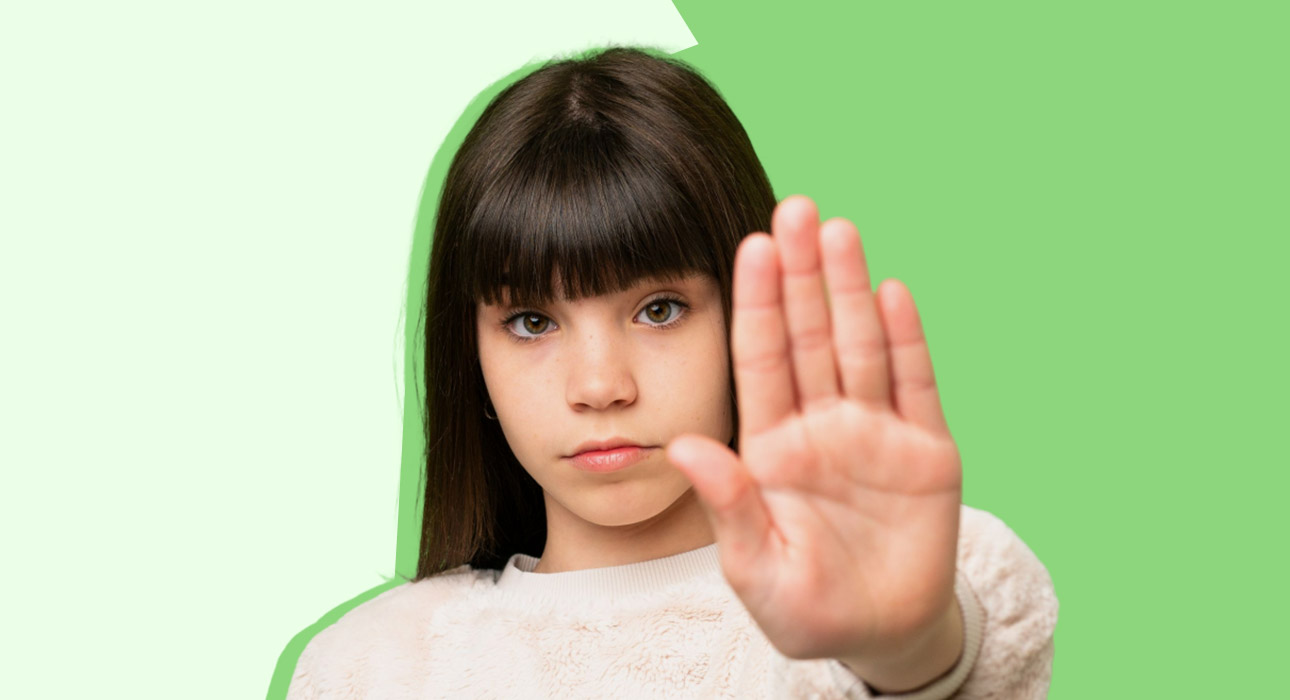
- Let children know that their bodies belong to them and they have the right to say “no” to being touched in a way they don’t like.
- Practice listening respectfully to your child when they express that they are uncomfortable with something and that they are being touched.
- Cultivate children’s ability to empathise with others by having them acknowledge others’ feelings, and that others have their personal space that should be respected.
Read More: The psychology behind consent
The Long-Term Impact of Learning Boundaries in Childhood
Teaching kids about boundaries sets kids up for life. The lessons children learn about boundaries may persist throughout their adult years. In settings in which children are listened to, in which they can communicate their feelings and where their physical space and personal preferences are taken seriously, they are more inclined to develop into secure and confident adults who communicate their boundaries in their relationships, and who recognise problematic environments that leave them feeling uncomfortable and are not afraid to ask for support.
Children who learn about boundaries have improved self-confidence, enhanced social-emotional health and better relationships with other children and adults. (Rogers, 1961; Bowlby, 1988) Alternatively, children who repeatedly had their boundaries transgressed and/or who were not allowed to vocalise their needs may struggle with assertiveness as adults, unable to refuse unreasonable requests, see toxic relationship dynamics, advocate for themselves or, in some circumstances, fail to acknowledge boundaries that were never communicated.
“Childhood and adolescents’ experiences of autonomy support and emotional validation correlate with healthy psychosocial functioning, improved adjustment, and better social competence (Deci and Ryan, 2000);” “Early experience of support and validation and opportunities to experience control contribute to better well-being, social and psychosocial adjustments, resilience throughout life” (WHO, 2020).
Read More: Consent: How It Plays an Important Role in Our Life
Conclusion
Knowledge of consent and healthy boundary setting does not magically materialise on someone’s sixteenth birthday. We learn this through millions of small moments and interactions with other people. These experiences show children whether their thoughts, feelings, and bodies deserve respect. The more they practice body autonomy, expressing emotions and communication from a young age, the more confidence, strength and empathy they develop.
Even young children can learn this! Establishing boundaries young allows for individual growth and development that benefits all of society. The children you are teaching today will become adults tomorrow. They will be capable of building relationships based on clear communication, respect, and consent. The simplest teaching of today sets forth healthy and life-saving habits of dignity.
References +
- Baumrind, D. (1991). The influence of parenting style on adolescent competence and substance use. Journal of Early Adolescence, 11(1), 56–95.
- Bowlby, J. (1988). A secure base: Parent-child attachment and healthy human development. Basic Books.
- Deci, E. L., & Ryan, R. M. (2000). The “what” and “why” of goal pursuits: Human needs and the self-determination of behaviour. Psychological Inquiry, 11(4), 227–268.
- Denham, S. A. (1998). Emotional development in young children. Guilford Press.
- Erikson, E. H. (1963). Childhood and society (2nd ed.). W. W. Norton & Company.
- Maccoby, E. E., & Martin, J. A. (1983). Socialisation in the context of the family: Parent-child interaction. In P. H. Mussen (Ed.), Handbook of child psychology (Vol. 4, pp. 1–101). Wiley.
- Rogers, C. R. (1961). On becoming a person: A therapist’s view of psychotherapy. Houghton Mifflin.
- UNICEF. (2021). Technical note: Gender-transformative approaches in education.
- World Health Organisation. (2020). WHO guidelines on preventing violence against children.