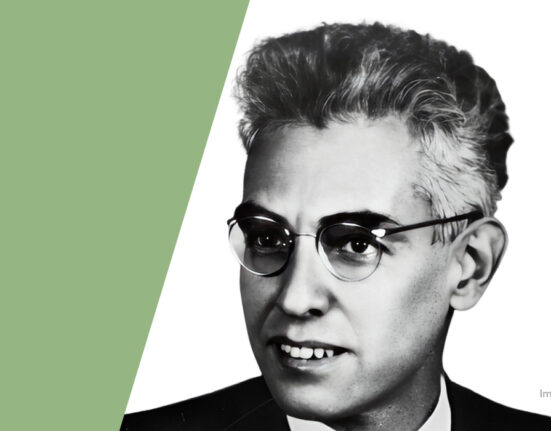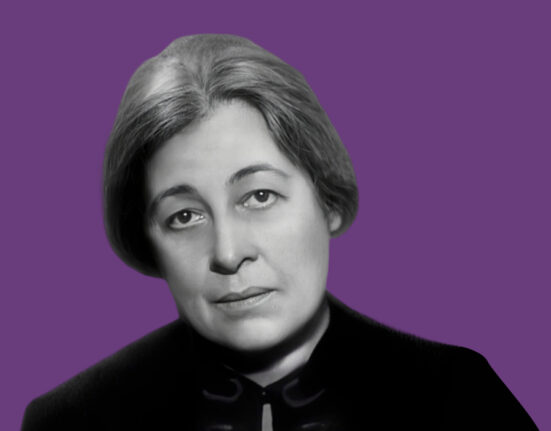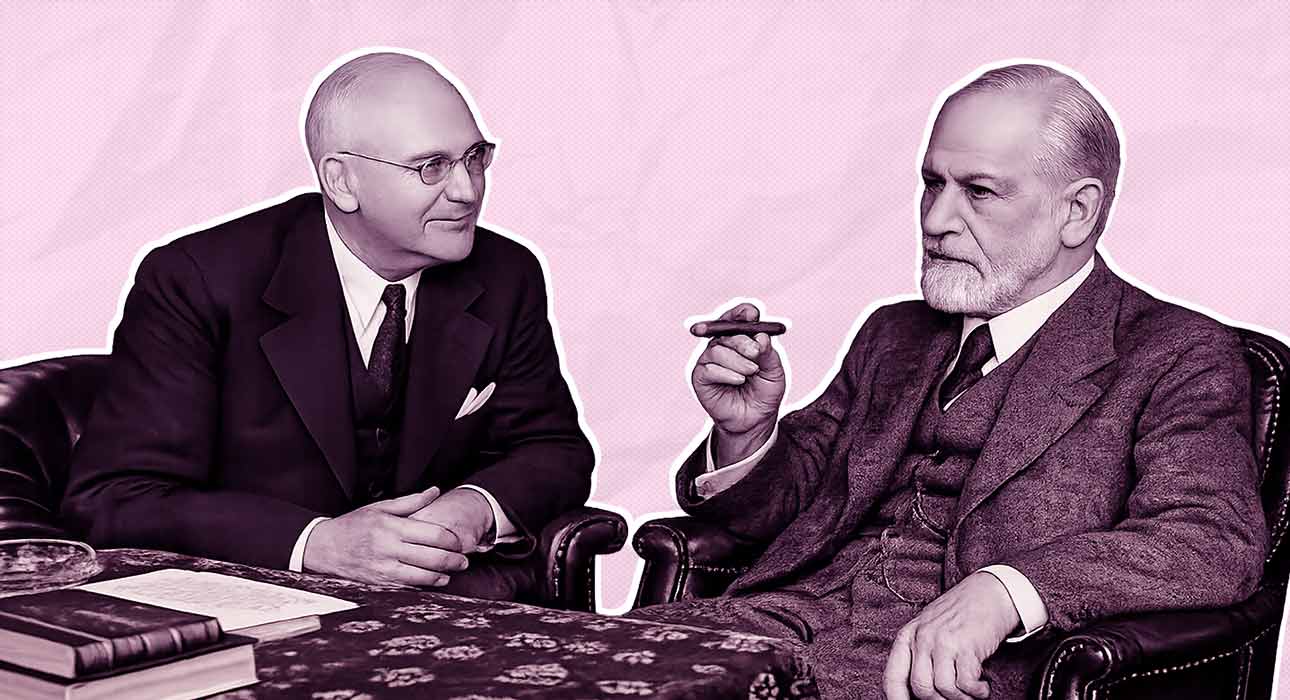
The world has witnessed revolutions, discoveries and grand events which have changed the course of history. However, not every change is grand; sometimes a brief conversation can alter the course of an entire discipline. One such conversation had occurred in Vienna in 1920, when a young American psychology student, Gordon Allport, went to visit the legendary psychoanalyst Sigmund Freud.
At that time, Sigmund Freud was an influential figure in psychology. His theories of the unconscious mind, childhood experiences and hidden motivation were dominating every intellectual discussion across Europe and beyond. During the visit, Gordon Allport was twenty-two years old and deeply admired the works of Sigmund Freud (Kelland, 2022). Something which the young lad was unaware of was that the meeting would leave him wondering about the human personality. Eventually, paving the path for one of the most influential branches of psychology, redefining the understanding of human personality.
Read More: Sigmund Freud and His Contributions in Psychology
The Story of the Boy on the Tram
When Allport went to meet his idol, he found himself in an awkward silence. Apparently, Freud was waiting for the young visitor to start the conversation. To eliminate the awkwardness, Allport started speaking of an incident he witnessed earlier in the day while riding the tram (Allport, 1968). The incident was about a little boy who refused to sit beside a man whom he considered dirty. Allport had found this to be an interesting incident and believed that the boy was afraid of dirt, which might have been because his mother is extremely attentive towards him.
After listening to the story, Freud asked a question that baffled the young visitor. Freud had asked Allport whether the little boy he had spoken of was him (Allport, 1968).
Freud’s Perspective: Beyond the Conscious Self
Freud believed that humans are often driven by unconscious desires, fears and conflicts which often stay hidden from conscious awareness. These hidden motives are revealed indirectly through their dreams, slips of the tongue, everyday actions and sometimes the stories they tell (Freud, 1900; Freud, 1923).
The belief of Freud also stands to be a core foundation of psychoanalysis. To him, Allport’s story held a deeper meaning. It appeared to be an expression of his personal worries, which remain hidden from his conscious awareness. Such an interpretation was common with Freud’s clinical method, which revolved around understanding deeper meanings associated with experiences that appear to be ordinary (Freud, 1915).
For Freud, looking beneath the surface was essential. For Allport, however, this was the problem.
The Birth of a Different Perspective on Personality
The young visitor, however, was not happy with Freud’s interpretation. To Allport, Freud seemed too eager to find a hidden meaning beneath the incident. The experience made him question whether the visible and obvious is being ignored in the search for hidden motives (Boeree, 2006; Kelland, 2022). The Vienna meeting made Allport view personality through a different perspective.
In 1937, Allport proposed the concept of functional autonomy. According to this concept, a motive that begins due to one reason can eventually become something meaningful and rewarding for the individual (Allport, 1937). This concept challenged the tendency of Freud to understand behaviour by looking at the past. Allport argued that psychologists must pay more attention to an individual’s present ambitions, experiences and conscious motives (Allport, 1937). In contrast to Freud, who explained adult behaviour in terms of childhood experiences, Allport stated that adult behaviours are more influenced by present interests than their past (Allport, 1961).
Whom They Studied Influenced What They Believed
A major difference between Sigmund Freud and Gordon Allport was the people they dealt with.
Freud analysed patients struggling with psychological disorders. Consequently, psychoanalysis often emphasised anxieties, conflicts and disorders (Freud, 1917). However, Allport had taken a different approach. He believed that, alongside Freud’s approach, healthy and emotionally mature individuals must also be studied (Allport, 1961). This approach prioritised focusing on individuals as unique, which later emerged as a broader perspective in psychology, influencing modern research in the domain of personality psychology (Schultz & Schultz, 2017, Chapters 2 & 7).
The Emergence of the Trait Theory
The meeting with Freud made Allport realise that an individual’s personality should not be understood by only trying to interpret their unconscious motives. Allport believed that each person is unique and has a unique set of traits that shape their behaviour and personality, and psychologists must consider that as well to understand personality completely (Allport, 1937).
This conviction eventually became the core foundation of the famous trait theory. Allport stated that every individual has distinguishable characteristics and emphasised that understanding one’s personality requires taking into consideration their uniqueness, personal values and observable patterns (Allport, 1937). His works are considered the foundation of modern personality psychology.
Conclusion
The story of Gordon Allport and Sigmund Freud highlights that scientific progress emerges from both agreement and disagreement. The irony is that Freud never realised the impact of the meeting on the young admirer. However, the meeting made Allport question Freud’s approach and seek a more balanced understanding of human nature. While Freud believed in understanding the hidden motives, Allport argued that the surface itself deserved serious attention. Their disagreement led to a better understanding of human behaviour.
The meeting in Vienna was more than a conversation between a legendary figure and a young mind. It was the beginning of a shift in psychology that continues to shape modern personality psychology research. Eventually, the disagreement ended up expanding personality psychology beyond just the study of unconscious motives and included present goals, conscious motives and individual characteristics (Kelland, 2022).
References +
- Freud, S. (1953). The interpretation of dreams (J. Strachey, Trans.). Hogarth Press. (Original work published 1900)
- Freud, S. (1957). The unconscious. In J. Strachey (Ed. & Trans.), The standard edition of the complete psychological works of Sigmund Freud (Vol. 14, pp. 159–215). Hogarth Press. (Original work published in 1915)
- Freud, S. (1963). Introductory lectures on psycho-analysis (J. Strachey, Trans.). W. W. Norton & Company. (Original work published 1917)
- Freud, S. (1961). The ego and the id (J. Strachey, Trans.). W. W. Norton & Company. (Original work published 1923)
- Allport, G. W. (1937). Personality: A psychological interpretation. Henry Holt and Company. Allport, G. W. (1961). Pattern and growth in personality. Holt, Rinehart and Winston. Allport, G. W. (1968). The person in psychology: Selected essays. Beacon Press. Boeree, C. G. (2006). Gordon Allport. Shippensburg University.
- Schultz, D. P., & Schultz, S. E. (2017). Theories of personality (11th ed.). Cengage Learning.
- Kelland, M. (2022). A brief biography of Gordon Allport. In Personality Theory in a Cultural Context. LibreTexts.