Education is what remains after one has forgotten what they learned in school, by Albert Einstein. It is a lifelong process that starts with the birth of an individual and continues throughout their lifetime till death. During this period, a person keeps on learning new things every day. The process of education knows no age limit!
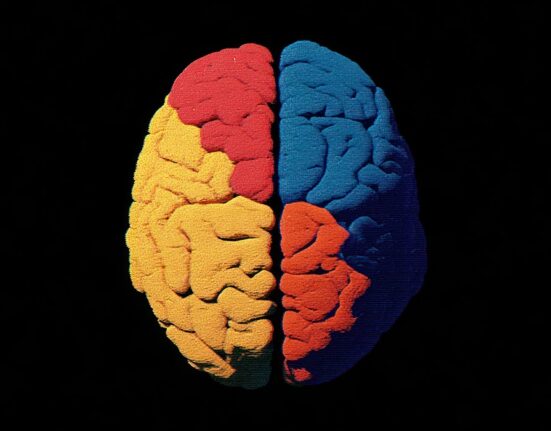
It plays a crucial role in the development of the brain and also in shaping a person’s moral character. These things are highly essential components for the survival of a human being in this harsh world. When the term ‘’ education ‘’ is mentioned, subjects like mathematics, literature, science and social studies come very often in the minds of people. However, fortunately, the scope of education is not limited to only these. Technical as well as real-life basic skills form an essential part of it. Revising the theoretical content is not sufficient.
The role of education in shaping lives
1. Critical thinking
Critical thinking can also be defined as the process of actively analysing things and evaluating information. This is a crucial thing to guide one’s beliefs as well as the actions that are to be taken every day. The act of critical thinking involves questioning all the assumptions and recognising biases by using logic. It connects ideas through sound and rational arguments.
For the development of critical thinking skills, observation of events, interpretation and analysis are crucial elements. The process of critical thinking cannot proceed without inference, evaluation and explanation of things.
2- Enhances understanding
Practical and life skill education are beneficial for providing a boost to a person’s understanding of various concepts. As they work in a way that transforms abstract theoretical concepts into somewhat easier and more tangible information. It makes the topics easier by connecting them with the examples of the real world, which people find more relevant to understand. The concept of life skills includes hands-on applications for its learners.
For example, rather than just memorising the concepts of chemistry, students who conduct the experiments by themselves, along with their teachers, tend to learn and understand things better. Instead of just reading about plants in a book, visiting a nursery near your home or working in your garden can help you gain practical knowledge.
3- Long-term memory retention
Practising new skills motivates an individual and reduces the level of stress by constantly focusing on betterment. All this automatically improves the focus and recall capacity of an individual.
4- Builds confidence
Practical education and life skills build and strengthen the level of confidence people have in themselves. Practical knowledge works in building confidence as they transform the theory into proven skills of the real world. Hands-on experiences build confidence as people learn from the mistakes that they make, and these little things help in fostering independence in a person.
Learning things by doing them reduces the fear that people have within their brains. Practising those activities on a regular basis boosts the level of self-belief. All these are the reasons why practical knowledge builds up the confidence. People perform better when the fear of being a failure is not surrounding them.
5- Problem solving
Practical knowledge and life skills make a person able to think independently. They increase critical thinking and the generation of creative ideas. All this helps a person to think from various different perspectives, not just the one of their own. These are the basics required in solving problems that occur in the daily life of a person.
Read More: Thinking and Problem-Solving
6- Collaboration skills
Working on things that are apart from just theory and are connected with the real world applications more strongly fosters better communication between people. It helps people bond and work together within societies and communities, which builds trust among each other.
7- Preparation for a professional career
Life skills train a person for their professional career. By making people effortlessly effective in working such skills are slowly making them employable for the real world. Therefore, in a way, life skills are working to bridge the gap, which is evidently large, between the theory and practical knowledge of work.
The Paradox of Higher Education
According to the records of the All India Survey on Higher Education ( AISHE ) 2021-22, on an approx. 1.07 million students in our nation graduate from colleges and universities on an annual basis. This data includes all the students who complete their graduation or post-graduation degree, even the diplomas. Within these, a significant portion, roughly 1.5 million students, are from the fields of engineering, alongside 8.5 million who are regular graduates. When looking at the top enrolments, the highest number of graduates are from the background of a Bachelor of Arts degree, which is followed by arts and science streams.
Among all these, only about 1.2million graduates who are considered to be employable immediately find suitable roles in the job market. The rest, who form a significant portion of people, face challenges due to a skill gap. This data presents the importance of life skills. Only 8% of the pass-out graduates in India can secure jobs that match their educational qualifications. While the overall employability for the freshers is around 45% to 51%.
Half of the graduates work in low-skilled jobs or in roles and positions that are completely irrelevant to their qualifications. However, all those who can get a job should consider themselves as being fortunate and blessed, as when it comes to the statistics of un-employability the proportion is extremely high. Only 13% of the students that pass out from colleges can find a job that could sustain them with daily bread to eat. The number of graduates and the postgraduate students’ ratio witness growth every year. From 95.4 lakh in 2020-21 to 1.07 crore in 2021- 22 indicates an increase in the passing population. The number of female participants remains low, with only 4 in 10 graduates in the labour force often citing domestic commitments.
Read More: Understanding Commitment: The Psychology Behind Promises and Hard Work
Conclusion
Life skills and practical knowledge about things are highly beneficial in today’s world. With a constantly increasing population and no generation in employment for the people, it becomes significant for people to polish their skill set. Being competitive becomes necessary and a basic thing for survival.
References +
Why should we be teaching life skills in school in 2025? Positive Action Program www.positiveaction.net
Unemployment and mental health www.iwh.on.ca Institute for Work and Health.
The cost of unemployment www.psychologytoday.com psychology today.
National Institute of Health (NIH) pmc.ncbi.nlm.nih.gov unemployment and mental health: a global study.
AISHE All India survey on higher education aishe.gov.in 6- Ministry of Education www.education.gov.in