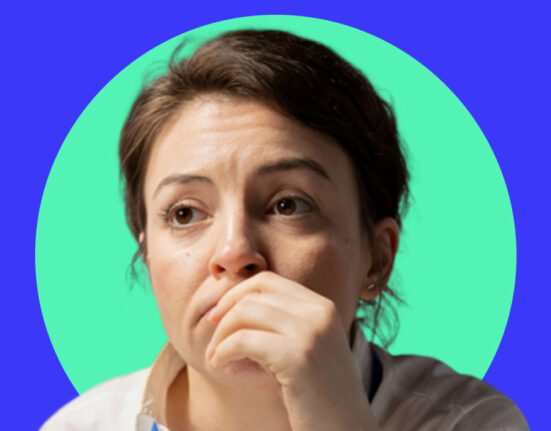
Riya scripts every smile until her jaw begins to ache, trying to polish a persona that she knows is bound to break. Her boss asks her to “focus.” he is unaware of the cost. Riya remains silent, too depleted to even speak. Riya has been battling depression for 2 years. Her condition is similar to that of many people suffering from mental challenges.
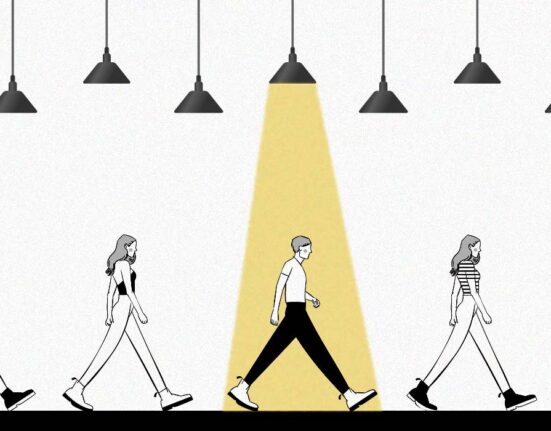
People often mask their personality traits, absurd behaviour, emotions, feelings, and neurodivergent symptoms to manage their image. People often manipulate their real behaviour to be liked by others, creating a certain identity or image in public. In a professional setting, it is known as ‘being professional’ and is treated as a necessity. For some people, these social masks are just effortless covers; however, for others, these are mentally draining and overwhelming performances that partly fuel burnout.
Cognitive Exhaustion and Burnout
Mental Disorders are quite common in working adults. As per the report of the WHO, 15% of working-age adults were estimated to have a mental disorder in 2019. The continuous masking of the symptoms along with routine tasks and job often causes the brain to overwork, leading to cognitive exhaustion. Doing this for a long time can cause burnout. Burnout is a prolonged response to chronic emotional and interpersonal stressors on the job. It includes three dimensions: emotional exhaustion, depersonalization, and lack of personal accomplishment. (Greenberg J.S.).
Various factors like work environment, work load, relationship with college, schedule and breaks, etc, can cause burnout; however, the dimension of emotional exhaustion can be easily affected by an individual’s emotional state. Individuals suffering from disorders might hide their symptoms to fit in, but in the long run, they may feel overwhelmed and exhausted as they are spending their time and resources hiding their real selves while selling their perfectly curated pictures. These individuals, to maintain the perfect persona, often try to overwork on their symptom they want to hide. A person suffering from loss or pain might try to add a lot of humour to their conversation. This often affects their mental state.
Read More: Why Chasing Achievement Leads to Burnout and Disconnection
Depression and the Fear of Being Seen
Depression affects almost one-third of U.S. adults (29%) at any point in their lifetime and about 18% currently. Individuals suffering from depression very often try to mask their symptoms and hide their disorder to protect themselves from social judgment and stereotyping. They even do this to protect their position and projects; many firms often prevent giving major responsibilities to individuals with mental disorders due to stereotypes. Depression is often associated with suicide; the risk of suicide in people with depression is nearly 20 times higher than in the general population. This stereotype affects the career of the patient, often causing them to be treated differently.
Read More: Understanding Suicide Risk in Middle-Aged Men: The Warning Signs We Can’t Ignore
Autistic Burnout
Academic Autism Spectrum Partnership in Research and Education (AASPIRE) conducted a qualitative study to better understand and define autistic burnout (Raymaker et al. 2020). Autistic burnout is a syndrome resulting from chronic life stress and a mismatch of expectations and abilities without adequate support. It affects every part of an individual’s life and continues to do so for a long time. Many autistic individuals face it for the first time during puberty; however, working autistic individuals often report autistic burnout. The major reported reason for this in the study was masking of autistic symptoms, pretending to be non-autistic. They have reported that pretending to be non autistic adds extra burden to regular tasks, adding to stress.
Physiological Effects of Masking Symptoms
Stress and Burnout often manifest themselves as physical symptoms in the long run. Cortisol is a major hormone responsible for the stress response. Its primary function is to increase the blood glucose, so we have the energy for action. Cortisol also causes other physiological changes – high BP, increased heart rate, suppressed immune system, etc. However, increased levels of cortisol for a long time period in the human body can create a balance, affecting the proper functioning. Robert Ornstein and David Sobel conducted a study on stress and its effects on the immune system.
The results showed that rats exposed to stress develop larger cancerous tumours than other rats. (Ornstein & Sobel, 1980). Several researchers have studied personality and health status and have concluded that stress and related constructs can indeed lead to ill health. In a study conducted in college students measuring the levels of an antibody that fights infections (salivary IgA) were measured during and after exams. As expected, S-IgA levels were lowest during the exam period, the most stressful time tested. (Glen Rein, Mike Atkinson, and Rollin McCraty, 1995). High levels of stress have often been connected to cardiovascular and cholesterol issues. Masking one’s symptoms in the long run can cause various other physiological issues like hypertension, migraine, TMJ, asthma flare-ups, etc.
Read More: How Stress Affects the Brain and Behaviour?
When Survival Becomes Strain: The Hidden Breakdown Caused by Masking
Often, when the mind is forced to perform roles that it cannot sustain, it often leads to breakdown. Often, when individuals try to mask their symptoms, they manifest in the form of psychosomatic symptoms, which are physical manifestations of psychological distress. For example, constant monitoring of behaviour might lead to unconscious muscle bracing resulting in muscle tension, ache, and fatigue. TMJ and chronic body pain are common examples. Individuals highly trying to mask their symptoms often suffer from IBS and gut issues, as the gut-brain axis is sensitive to anxiety and stress.
In some cases like autistic individuals might suffer from sensory issues like sensitivity to bright light or irritation to certain sounds. Individuals suffering from bipolar disorder can develop extreme moodiness in regular life, where they have control. Sometimes, due to constant masking on weekdays, individuals might be extremely exhausted on weekends, leading to excessive sleep. However, in other cases, for some individuals, even when the workday ends, the brain continues replaying social interactions to check for mistakes with the motive of avoiding them in future, leading to Insomnia.
Read More: The Relation Between Your Stress and Gut
Loss of identity
When someone is constantly being awarded for their alternate identity, this very often leads to feelings of being lost and trapped. An individual begins to feel that their actual self is unworthy of praise and appreciation. This is often common in the case of individuals with depression. They might also start feeling lonely, developing a feeling that “no one loves a depressed person” or “If anyone else knew that I am depressed, they might not be happy to talk to me”. They might feel that there is no one to talk to about their actual feelings, contributing to feelings of being unloved and lonely.
Conclusion
Productivity at the expense of an individual’s mental health not only hinders their growth but also their physical health, mental health, relationships, social life, etc. Symptoms of this might only begin with mild stress and anxiety, but are often in the long run, end up damaging them more. Mental health is something that takes time to heal. Masking of symptoms by avoiding all the side effects is almost impossible.
Workplace wellbeing requires moving beyond superficial activities and addressing the actual demands of the situation. For an individual, identification of these symptoms is the first step toward reclaiming their health. For the organisation, the goal must be to cultivate a culture of safety – physical and psychological – that welcomes diversity. The world was not designed for individuals with disability, and hence the major focus should be on maintaining an environment that makes them feel included.
References +
Glen Rein, Mike Atkinson, and Rollin McCraty, “The Physiological and Psychological Effects of Compassion and Anger: Part 1 of 2,” Journal of Advancement in Medicine 8 (1995): 87–105.
Howard S. Friedman and Stephanie Booth-Kewley, “The ‘Disease-Prone Personality’: A Meta-Analytic View of the Construct,” American Psychologist 42(1987): 539–55.
Understanding autistic burnout https://share.google/B4ZxuXNMoOMwP7A7Z Greenberg, Jerrold S.Comprehensive stress management (13th ed.) McGraw-Hill 43-70