Disclaimer: The following article may contain words and themes that are emotionally sensitive and can be triggering. Please read with caution. This material is for awareness purposes only.
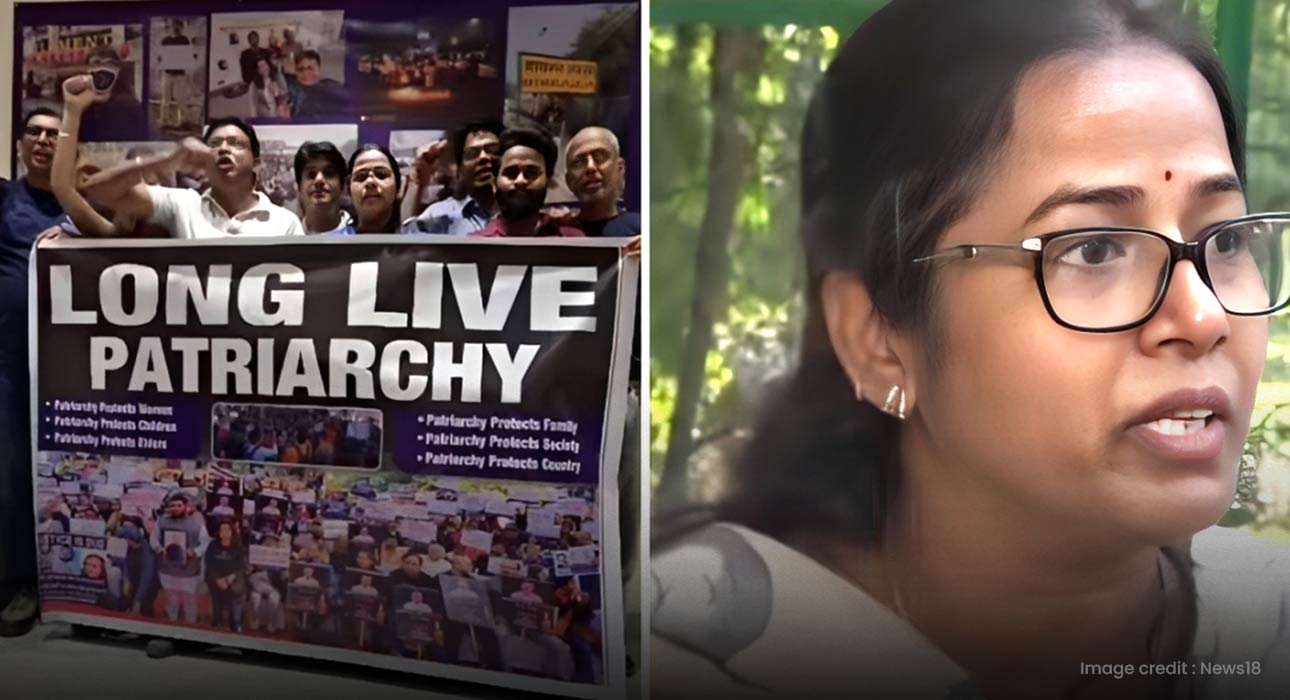
A “Long Live Patriarchy” protest in Delhi demanding gender-neutral laws and a national commission for men has sparked widespread criticism. This follows protests by women in Delhi demanding safety, freedom and strict penalties against sexual violence. The planned protest was organised by the NCM India Council for Men Affairs, a non-profit group that seeks legal support for male victims and gender-neutral legal reforms.
The protest has drawn widespread criticism online, questioning patriarchal standards and their present definition of women’s rights. The protest stated that women must fulfil their duties as homemakers and continue cleaning, cooking and raising children, while earning and protecting the family is a man’s duty. It also included women who defended patriarchy and stated that women need to be at home and not chase careers and money.
The Foundations of Patriarchy
Patriarchy comes from the Greek word that translates to the rule of the father and is a common mode of control and gender-based power in many conservative and third-world countries. A patriarchal society often leans towards men in terms of money, power and control. The male gender becomes the primary decision-maker and unspoken leader. Women are relegated to duties like taking care of the home, children and family. In many communities, women even today are stopped from having any exposure to the outside world. In many Indian cultures, women are expected to cover their face and head to prevent others from seeing their face.
Read More: The Psychology of Power and Dominance: How They Shape Human Behaviour
Violation of Basic Women’s Rights
In India, patriarchy has always controlled the regular functioning and autonomy of women over the years. Although more women are demanding freedom and rights, there are still several communities and rural areas where women are confined to their homes with little to no access to basic rights. Patriarchy continues to oppress women in these areas.
- Right To Education
- Freedom To Work
- Child Marriage
- No Autonomy over pregnancy
- Imprisoned Lifestyles
- Rigid Moral Codes of Conduct
- No Remarriage after Widowhood
- All Earnings Taken by Male Members
- No Right Over Family Property
Women’s Rights Movements
Today, several movements and organisations are fighting for women’s rights and safety, as well as basic access to public roles and spaces. This comes amid widespread fear due to rape, sexual violence and cruelty not just inside the home. But also in places that were once thought safe. Hospitals, open roads and even vehicles have become unsafe for women. There is a large call to implement better safeguards and punishments to prevent horrific acts of violence and aggression towards women and children. Even young girls are no longer safe in India, a country that reveres the female Goddess as mother.
Women Outside The Home
Indian women have, especially in the last decade, made remarkable achievements in various fields, from education, sports, arts and careers. Women have been challenging patriarchal ideologies to prove that their place is not just inside the kitchen or on the floor. In sports, which is often considered a man’s domain, several Indian women have broken records and brought home laurels. The Indian women’s hockey team ended a 44-year stalemate by winning gold at the Asian Games. The Indian Women’s Cricket Team became the first women’s team in the world to earn a shortlist spot at the Laureus World Sports Awards.
Read More: The New Era of Women’s Cricket Through the Lens Of WPL
Men’s Rights in India
In conservative countries, men are often psychologically nurtured to think of themselves as caregivers and are stripped of the ability to process healthy emotions. Patriarchy has often been used as a tool to prevent men from becoming emotionally capable or respectful, while this scenario is also slowly changing in India. However, the only area that may require major assessment is the recognition of sexual abuse in men.
There has always been an idea that men can never experience rape or molestation. This is why there is no legal recognition of, or punishment for, adult male rape in India. However, the Prevention of Child Sexual Offences (POCSO) recognises sexual violence and crimes against minor boys and girls, as well as punishment of the accused regardless of their gender.
Read More: Union Law Ministry advised Reducing the “Age of Consent” for the POCSO Act
Conclusion
The Long Live Patriarchy protest draws attention to the reform required in a developing country like India where many people still live with outdated ideologies. The protest highlights why awareness and sensibility must be more normalised through in-depth research and social psychology. It also reflects the need for families and individuals to recognise abuse and neglect without compromising on basic dignity and freedom of one gender over another.
References +
- Cambridge https://dictionary.cambridge.org/dictionary/english/patriarchy
- News 18 https://www.news18.com/amp/viral/long-live-patriarchy-delhi-protesters-raise-slogan-internet-says-inka-kuch-nahi-ho-sakta-ws-l-10369284.html
- YKA https://www.youthkiawaaz.com/2017/12/role-of-patriarchy-and-status-of-women-in-indian-society/