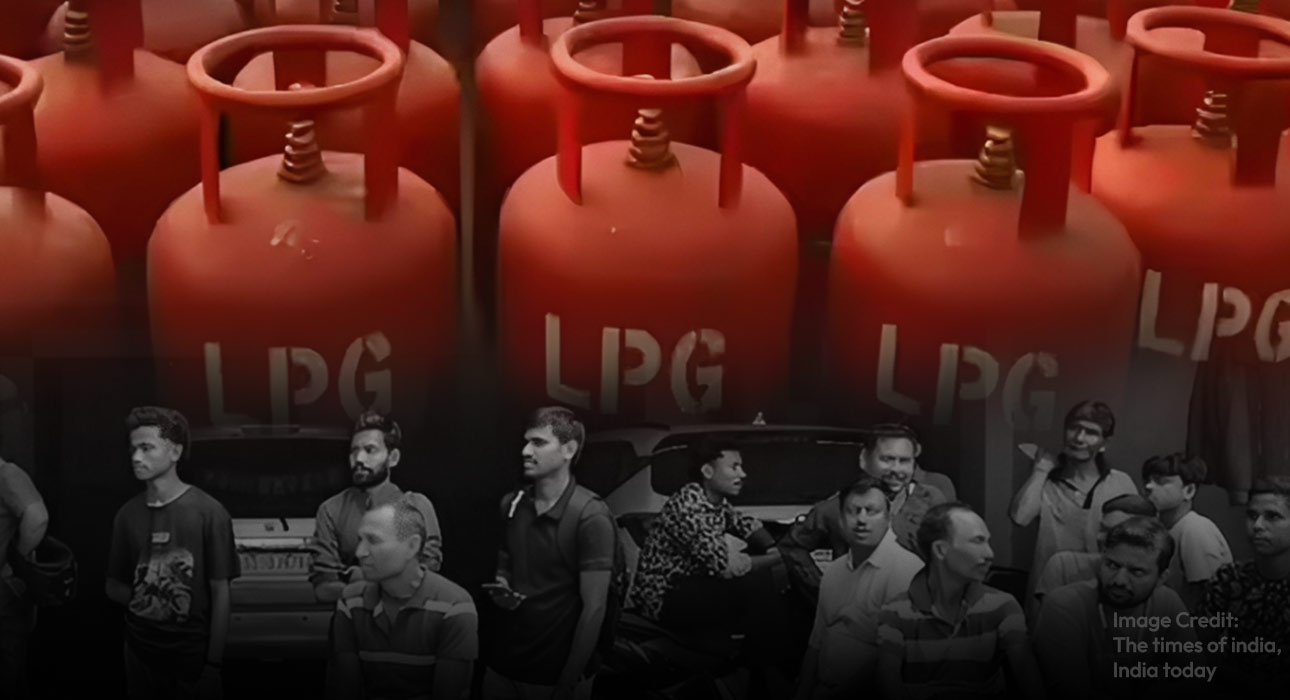
The ongoing conflict among the Middle East countries has affected the LPG supplies across the states of India. This has created panic among the public, wherein people are stocking cylinders and endlessly buying induction. As a result of this, an advisory had been published for the state and union territories by the Centre. The advisory clarifies that currently India has enough stock for LPG cylinders, and in case the conflict continues for a longer time, prices won’t increase.
Also, private organisations such as Hindustan Petroleum have also posted notifications related to having adequate stock. However, despite the above announcement and notification, people are in panic, and they are stocking more than the required resources of LPG and petroleum. Another guideline has come against violators who are selling LPG cylinders at higher prices than sanctioned by the government. The Ministry of Home Affairs have put up 24X7 control over the news and headlines broadcasting about natural gas and petroleum. This is to make sure that no false information is delivered to the citizens.
India and LPG Consumption
Annual consumption of LPG in India is 13.3 million tonnes. Out of the total, 87 per cent is consumed in the domestic sector; it largely includes household kitchens. The rest of it is used by the commercial sectors, such as hotels and restaurants. A majority of the LPG requirement, which is approximately 62 per cent, is met through imports.
Why is this Shortage?
Iran and Tehran’s realisation have shut the Strait of Hormuz after the US-Israel attack. The Strait of Hormuz is a key sea route from where India gets 85-90 per cent of LPG. LPG is imported from West Asian nations, including Qatar and Saudi Arabia. Therefore, the shortage is not yet there, but it’s a predictability considering the factors.
Also, the restaurants and hotels have announced that they may need to close due to limited LPG availability. There are certain schools that have issued a notice stating that school meals will be provided in case LPG is not available to them. These notifications have created panic among people. This is with the fear that next is the domestic area that may be impacted. Induction and induction cooktops are also out of stock in both markets and online. Platforms. Therefore, people are trying to safeguard cylinders and buy induction.
Government Response
Law and order is being maintained against the black marketing by having a tight security. The police officers have prepared a list of agencies and their jurisdiction to view the ongoing problem of LPG supply. Thus, ensuring smooth distribution and preventing any attempt to black market.
Any Affected People with Gas Pipelines?
Piped Nature Gas (PNG) and LPG are two contrasting wats of delivering energy. One is physically distributed, while the other is a continuous infrastructure flow. PNG is India’s latest cooking fuel distribution structure. The city’s gas distribution pipelines have the least disruption as of now. While LPG is facing logistics and distribution problems. It reveals a deeper vulnerability of architecture and a complex distribution chain in India’s cooking fuel, which depends on imports.
Psychology of Sacrsity
Since the constant news about the predictable LPG gas shortage in the context of the conflict has been going on. It has created panic among people. People have started buying LPG cylinders in numbers that are more than their requirements. Also, induction has been either unavailable or available at a high price in the market and on online platforms. Famous online shopping platforms such as Flipkart, Amazon, Blinkit, etc. have notified induction as out-of-stock products.
This reveals how people’s thinking, emotions, and behaviour change when an essential thing becomes limited or difficult to obtain. According to Robert Cialdini, the perceived value of the essential thing increases during the time of sacrsity. Daniel Kahneman and Amos Tversky, in their concept of loss aversion, claim that scarcity increases the fear of losing something, and people tend not to share their resources.