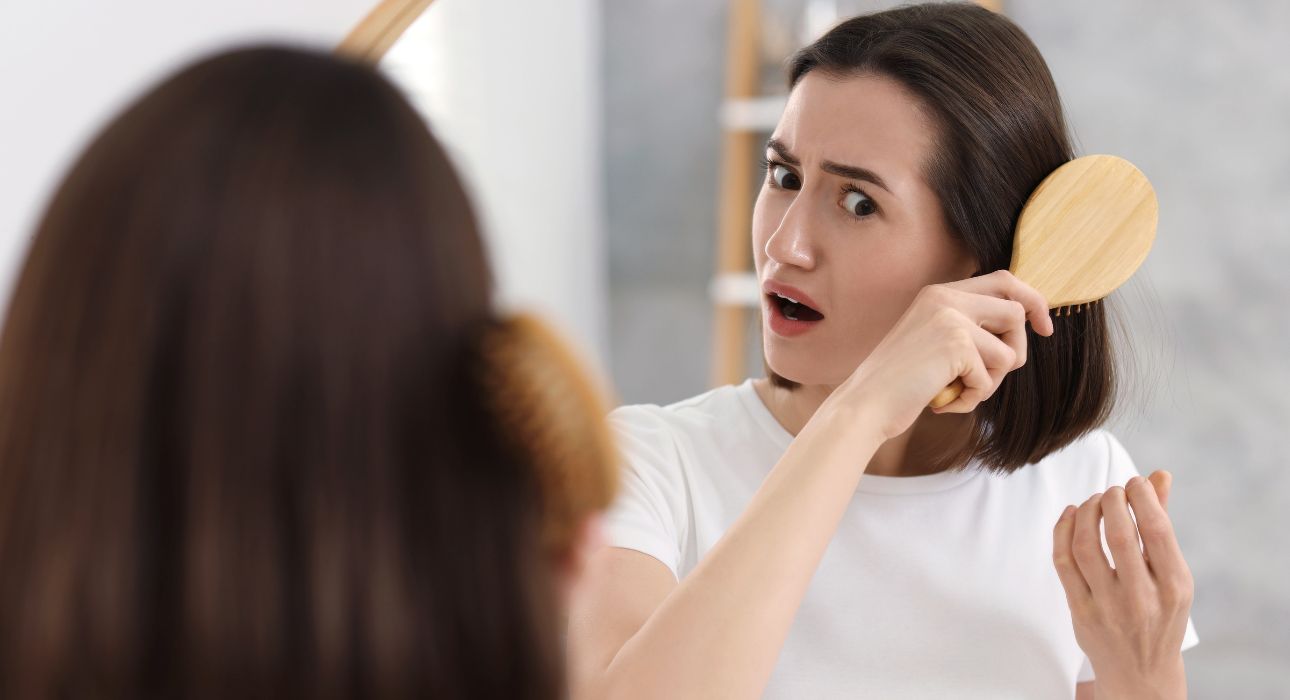
Bringing a baby into the world is one of the most profound things a woman’s body can do. But a few months later, many new mothers find themselves standing in the shower, staring at clumps of hair collecting around the drain, wondering if something is terribly wrong. The good news: it usually isn’t. But understanding why it happens, and what you can actually do about it, makes a real difference.
Why Does Hair Fall After Childbirth
During pregnancy, rising estrogen levels push most of your hair into a prolonged growth phase. Hair that would have naturally shed over those nine months simply stays put. The result? Thicker, fuller hair that many women love. Then delivery happens. Estrogen levels drop sharply in the weeks following birth, and all that hair that was “saved up” starts shedding at once. This process is called telogen effluvium, a temporary disruption to the hair growth cycle where a large percentage of follicles shift into the resting and shedding phase simultaneously. It typically begins around 2 to 4 months postpartum and can feel alarming because the volume of shedding is much higher than normal. This is not the same as genetic hair loss. The mechanism is different, the timeline is different, and so is the path forward.
What Makes It Worse
The hormonal shift alone can cause significant shedding, but several other factors often pile on during the postpartum period:
- Nutritional gaps from breastfeeding, which draw heavily on the body’s iron, zinc, and vitamin D stores
- Sleep deprivation, which increases cortisol and keeps the body in a mild stress state
- Thyroid fluctuations, which are common after delivery, can independently drive hair fall
- Crash dieting or undereating while trying to lose baby weight
- Emotional stress, which is real and physical in its effects on hair follicles
Any one of these factors can extend or intensify the shedding beyond what hormones alone would cause. When multiple factors are present together, the hair loss can feel overwhelming.
How Long Does Postpartum Hair Loss Actually Last?
For most women, the peak shedding happens between months 3 and 6 after delivery. By months 9 to 12, hair growth typically returns to its normal cycle. But this timeline assumes the body is recovering well, nutritionally, hormonally, and physically.
If shedding continues beyond a year, or if the hair doesn’t seem to be regrowing, that’s a signal worth paying attention to. It usually points to something else going on, a thyroid imbalance, nutritional deficiency, or an underlying scalp condition that needs evaluation rather than just patience.
Understanding the difference between “this is temporary” and “this needs attention” is where many women lose time. Waiting indefinitely when there’s an underlying issue only delays recovery.
What Actually Helps During Recovery
Managing postpartum hair loss isn’t about buying a shelf full of products. It’s about supporting the body’s natural recovery process with the right inputs:
- Prioritise protein at every meal: hair is made of keratin, which requires adequate dietary protein to rebuild
- Get your iron and ferritin levels checked, not just haemoglobin; low ferritin is one of the most common and missed causes of prolonged postpartum shedding
- Don’t skip healthy fats: omega-3s from fish, flaxseeds, and walnuts support scalp health from within
- Be gentle with your hair: avoid tight ponytails, excessive heat styling, and harsh chemical treatments while follicles are in a fragile state
- Consider a blood panel that includes thyroid function (TSH, T3, T4) if shedding feels disproportionate
Traya’s approach to postpartum hair health addresses exactly this, identifying the specific internal causes driving the shedding rather than applying a generic solution, which makes the recovery process more targeted and more effective.
Scalp Care Matters More Than You Think
The scalp is where hair actually lives. During periods of hormonal change, the scalp environment can shift, sometimes becoming dry, sometimes more oily, and sometimes more prone to inflammation. A clean, well-nourished scalp allows recovering follicles to do their job without added interference. Gentle massages with light oils a couple of times a week can improve circulation and support the growth phase as it kicks back in.
Final Thoughts
Postpartum hair loss is one of those things that catches new mothers completely off guard, even though it’s extremely common. The shedding is real; it can be intense, but it is usually temporary when the body gets the right support. The key is not to panic, not to ignore it either, and to understand that hair recovery after childbirth is closely tied to overall physical recovery. If your body is rested, nourished, and hormonally balanced, your hair will follow.