Every pregnancy leads to some degree of diastasis recti. During this process, the connective tissue between the rectus abdominis muscles stretches and may separate along the midline of the abdomen. Diastasis recti will continue to affect 60 per cent of women who have given birth to their children. The condition develops into a tummy bulge, which doctors may misinterpret as persistent fat in the abdominal area when medical treatment is not happen. The condition progressively weakens core muscles and causes people to experience back pain. Although the condition mainly affects women after they give birth, it can also develop in men. Diastasis recti develops in people who experience high abdominal pressure and have excessive visceral fat, and fail to engage their core muscles. Radium Medical Aesthetics sees many patients who struggle with a “post-baby tummy” despite diet and exercise. The condition appears to be stubborn tummy fat, but it actually requires special medical attention because of muscle separation. The condition affects stomach fat because the body develops muscle separation between abdominal muscles.
The condition produces:
- A protruding or “doming” abdomen
- Weak core stability
- Poor posture
- Lower back pain
- People find it hard to achieve a flat stomach
The condition affects people because it represents a medical muscle disorder that goes beyond ordinary weight problems.
Common Causes of Diastasis Recti
Diastasis recti develops when there is prolonged pressure on the abdominal wall to the point where the stretched muscles are unable to return to their original position within the tummy walls. Most common causes:
- Abdominal muscles stretch during pregnancy and post-partum recovery
- People who experience quick weight changes
- Visceral fat pushes the abdominal wall away from the body
- People who perform core exercises incorrectly through early crunches or sit-ups
- People who have weak deep core muscles, which include the transverse abdominis
Pregnancy hormonal changes lead to softened connective tissues, which increase the likelihood of physical separation. Diastasis recti is not an urgent medical condition that needs to be addressed immediately. Diastasis recti needs treatment because untreated cases will disrupt core stability, resulting in back pain, poor posture and abdominal bulging. People who develop severe symptoms face a risk of pelvic floor dysfunction, which leads to urinary incontinence, digestive problems and hernia development.
How to Check If You Have Diastasis Recti
You can measure your condition through a simple home test, which requires three steps to complete.
- Step 1: Lie on your back with knees bent
- Step 2: Lift your head slightly as if doing a mini crunch
- Step 3: Your fingers should touch your abdominal midline to complete the exercise.
Possible signs:
- A gap of two or more finger widths
- A soft trench-like indentation
- A visible dome when sitting up
A healthcare professional can assess the patient’s condition by conducting a proper clinical assessment to evaluate the severity of the separated abdominal muscles.
Can We Treat Diastasis Recti Naturally?
Mild cases may improve with time and targeted rehabilitation.
Helpful home strategies:
- Deep core breathing
- Transverse abdominis activation
- Pelvic tilts
- Heel slides
- Postural correction
The exercises work to develop the inner core support system through their strengthening effect.
Exercises to avoid (especially early):
- Crunches
- Sit-ups
- Leg raises
- Full planks
People believe that performing abdominal exercises provides the correct method for strengthening these muscles. The movements will increase intra-abdominal pressure, which will lead to worse symptoms. The gap in diastasis recti requires more than exercise for treatment, which only delivers partial closure.
Radium Medical Aesthetics offers Non-Surgical Diastasis Recti Treatment.
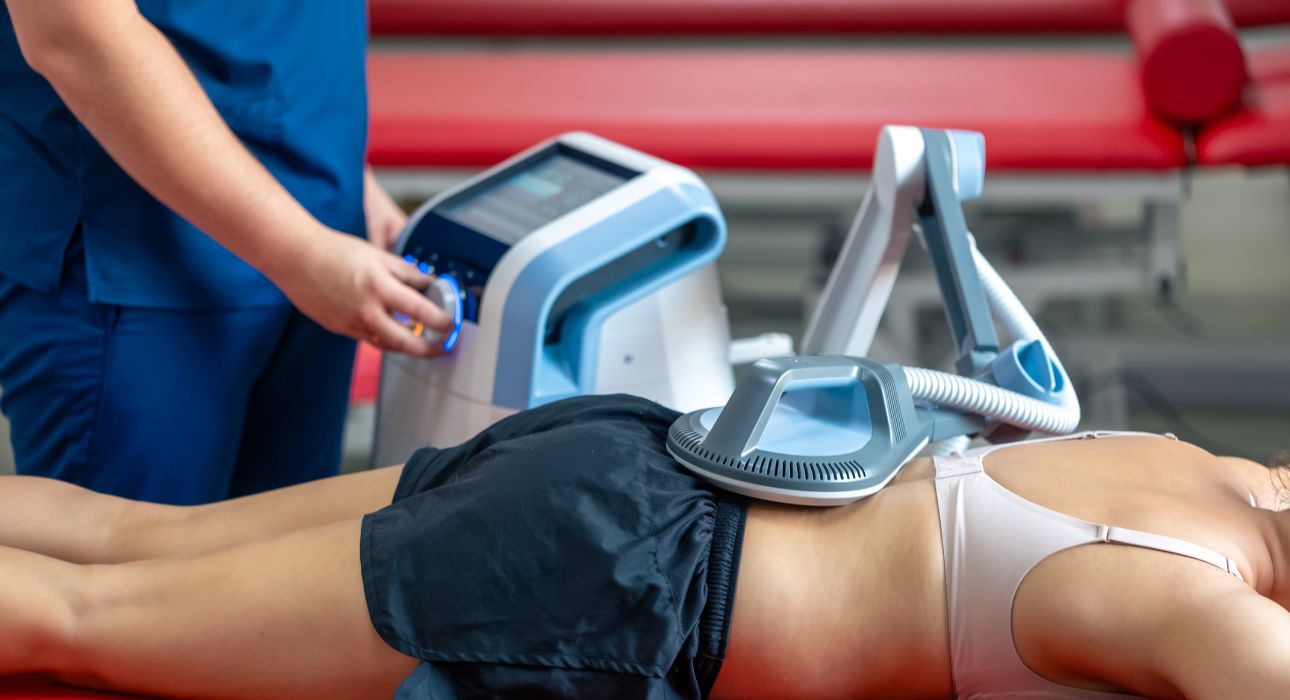
Radium Medical Aesthetics, one of the best aesthetic clinics in Singapore, offers Emsculpt Neo as a non-invasive solution to strengthen abdominal muscles and improve core integrity. Emsculpt Neo surpasses traditional fat-targeting treatments through its ability to directly treat muscle tissues, which makes it suitable for patients who have muscle separation.
How Emsculpt Neo Works?
Emsculpt Neo in Singapore operates through two advanced technologies:
HIFEM, which stands for High-Intensity Focused Electromagnetic Energy, produces maximal muscle contractions that equal thousands of crunches after one treatment session. The programme requires at least six sessions, which should be scheduled every four to five days to see visible muscle-strengthening results. The process will show gradual development of core stability, which will also result in reduced spaces between the separated abdominal muscles. EmSculpt Neo operates through two different functions, which include its Radiofrequency energy, or RF energy. The system uses RF energy to eliminate persistent body fat while enhancing skin tightness.
The required session count for Emsculpt Neo treatment depends on the specific patient’s needs. The treatment protocol at Radium Medical Aesthetics requires:
- 4 to 6 sessions for mild to moderate cases
- 1–2 sessions per week
For more significant separation:
- Patients may need between six and eight total treatment sessions
- Patients require maintenance treatment every three to six months
What Results Can Patients Expect?
Most patients experience progressive improvement over 8 to 12 weeks as the muscles remodel.
Key benefits:
- Stronger and tighter core muscles
- Reduced abdominal bulge
- Improved waist definition
- Better posture and reduced back discomfort
- Enhanced functional strength
Clinical studies have demonstrated:
- Up to 25% increase in muscle thickness
- Up to 30% reduction in abdominal fat
- Measurable improvement in muscle separation
Emsculpt Neo vs Surgery for Diastasis Recti
| Treatment | Downtime | Muscle Strengthening | Fat Reduction | Best For |
|---|---|---|---|---|
| Emsculpt Neo | None | Yes | Yes | Mild–moderate separation |
| Core Physiotherapy | None | Yes | No | Early mild cases |
| Abdominoplasty | 2–4 weeks | Yes | Yes | Severe separation |
Who Is a Suitable Candidate?
Emsculpt Neo is ideal for:
- Post-partum women who maintain an abdominal bulge after childbirth
- People who have weak core muscles
- People who cannot engage in strenuous core muscle training
- The patients who want an effective treatment that requires zero recovery time.
The assessment process at Radium Medical Aesthetics will identify which treatments match your health condition. Emsculpt Neo delivers its best outcomes when used together with these two treatment methods. The system establishes its effectiveness through its dual approach, which handles multiple treatment needs. The two separate elements of this model will treat
✔ Muscle separation
✔ Skin laxity
✔ Localised fat deposits.
Conclusion
Although diastasis recti is not a medical emergency, it can be a functional and aesthetic concern for many people. Diastasis recti can sometimes not be treated with home remedies or exercises. It is important to target both muscle strength and fat loss. Emsculpt Neo offers an effective, non-surgical solution for basic rehabilitation that can offer diastasis recti treatment in Singapore.
The combination approach requires people to develop muscle strength while decreasing their body fat. Emsculpt Neo provides Singaporean diastasis recti patients with a non-surgical core restoration method that maintains its effectiveness. Patients at Radium Medical Aesthetics receive customised treatment plans that help them regain abdominal strength and improve their posture while achieving a better-defined waistline through non-invasive methods.